Articles | Volume 67, issue 2
https://doi.org/10.5194/aab-67-207-2024
© Author(s) 2024. This work is distributed under
the Creative Commons Attribution 4.0 License.
https://doi.org/10.5194/aab-67-207-2024
© Author(s) 2024. This work is distributed under
the Creative Commons Attribution 4.0 License.
Myostatin mutation (g+6723G > A) introgression: comparative analysis of growth, slaughter, and carcass traits in Texel, Pırlak, and their crosses (F1 and BC1)

Serdar Koçak
CORRESPONDING AUTHOR
Department of Animal Science, Faculty of Veterinary Medicine, Afyon Kocatepe University, Afyonkarahisar, 03200, Türkiye
Mustafa Tekerli
Department of Animal Science, Faculty of Veterinary Medicine, Afyon Kocatepe University, Afyonkarahisar, 03200, Türkiye
Metin Erdoğan
Department of Veterinary Biology and Genetics, Faculty of Veterinary Medicine, Afyon Kocatepe University, Afyonkarahisar, 03200, Türkiye
Koray Çelikeloğlu
Department of Animal Science, Faculty of Veterinary Medicine, Afyon Kocatepe University, Afyonkarahisar, 03200, Türkiye
Ebubekir Yazıcı
Department of Obstetrics and Gynecology, Faculty of Veterinary Medicine, Afyon Kocatepe University, Afyonkarahisar, 03200, Türkiye
Zehra Bozkurt
Department of Animal Science, Faculty of Veterinary Medicine, Afyon Kocatepe University, Afyonkarahisar, 03200, Türkiye
Özlem Hacan
Department of Animal Science, Faculty of Veterinary Medicine, Afyon Kocatepe University, Afyonkarahisar, 03200, Türkiye
Mustafa Demirtaş
Department of Animal Science, Faculty of Veterinary Medicine, Afyon Kocatepe University, Afyonkarahisar, 03200, Türkiye
Samet Çinkaya
Department of Animal Science, Faculty of Veterinary Medicine, Afyon Kocatepe University, Afyonkarahisar, 03200, Türkiye
Related authors
Serdar Koçak, Zehra Bozkurt, Özlem Gücüyener Hacan, Koray Çelikeloğlu, Mustafa Tekerli, Mustafa Demirtaş, Samet Çinkaya, and Metin Erdoğan
Arch. Anim. Breed., 68, 459–472, https://doi.org/10.5194/aab-68-459-2025, https://doi.org/10.5194/aab-68-459-2025, 2025
Short summary
Short summary
This study was conducted to identify key welfare risks using the AWIN (Animal Welfare Indicators) protocol for extensively managed sheep farms. Each farm was visited once. A total of 702 sheep were individually assessed on the farms as part of the second-level welfare criteria. The main animal welfare risks identified were housing facilities, the provision of adequate and balanced diets to the animals, and the implementation of appropriate animal health plans in accordance with the breed requirements.
Mustafa Tekerli, Metin Erdoğan, Serdar Koçak, Koray Çelikeloğlu, Ebubekir Yazıcı, Özlem Hacan, Zehra Bozkurt, Mustafa Demirtaş, and Samet Çinkaya
Arch. Anim. Breed., 65, 231–238, https://doi.org/10.5194/aab-65-231-2022, https://doi.org/10.5194/aab-65-231-2022, 2022
Short summary
Short summary
Factors such as genotype, sex, type of birth, maternal age, weaning age and birth weight must be considered in evaluation of pre- and post-weaning growth traits. Myostatin mutation was introduced to native Turkish breed Ramlıç by marker-assisted introgression (MAI). The mutation has a positive effect on ultrasonographic carcass traits in crosses. Lambs with myostatin tended to have deeper longissimus muscle and good carcass characteristics, and they may be recommendable for Turkish farmers.
Serdar Koçak, Zehra Bozkurt, Özlem Gücüyener Hacan, Koray Çelikeloğlu, Mustafa Tekerli, Mustafa Demirtaş, Samet Çinkaya, and Metin Erdoğan
Arch. Anim. Breed., 68, 459–472, https://doi.org/10.5194/aab-68-459-2025, https://doi.org/10.5194/aab-68-459-2025, 2025
Short summary
Short summary
This study was conducted to identify key welfare risks using the AWIN (Animal Welfare Indicators) protocol for extensively managed sheep farms. Each farm was visited once. A total of 702 sheep were individually assessed on the farms as part of the second-level welfare criteria. The main animal welfare risks identified were housing facilities, the provision of adequate and balanced diets to the animals, and the implementation of appropriate animal health plans in accordance with the breed requirements.
Özlem Hacan, Mustafa Tekerli, Samet Çinkaya, and Mustafa Demirtaş
Arch. Anim. Breed., 67, 561–570, https://doi.org/10.5194/aab-67-561-2024, https://doi.org/10.5194/aab-67-561-2024, 2024
Short summary
Short summary
This study examined genetic changes in body measurements at birth in Turkish Arabian foals born between 1987 and 2007. Significant factors influencing body size traits were identified. Additive genetic and maternal heritabilities varied, highlighting their impacts on foal traits. Results suggest the potential for selective breeding to enhance these traits over time, aiding future breeding strategies in Turkish Arabian horses.
Samet Çinkaya and Mustafa Tekerli
Arch. Anim. Breed., 66, 325–333, https://doi.org/10.5194/aab-66-325-2023, https://doi.org/10.5194/aab-66-325-2023, 2023
Short summary
Short summary
This study was carried out to estimate variance components using a univariate animal model accounting for maternal effect by the restricted maximum likelihood (REML) method. Some environmental factors affecting body measurements and ultrasound carcass traits in yearling Anatolian buffalo calves were highlighted for the successful selection program. Genetic and phenotypic correlations and selection responses were also revealed in this study.
Mustafa Tekerli, Metin Erdoğan, Serdar Koçak, Koray Çelikeloğlu, Ebubekir Yazıcı, Özlem Hacan, Zehra Bozkurt, Mustafa Demirtaş, and Samet Çinkaya
Arch. Anim. Breed., 65, 231–238, https://doi.org/10.5194/aab-65-231-2022, https://doi.org/10.5194/aab-65-231-2022, 2022
Short summary
Short summary
Factors such as genotype, sex, type of birth, maternal age, weaning age and birth weight must be considered in evaluation of pre- and post-weaning growth traits. Myostatin mutation was introduced to native Turkish breed Ramlıç by marker-assisted introgression (MAI). The mutation has a positive effect on ultrasonographic carcass traits in crosses. Lambs with myostatin tended to have deeper longissimus muscle and good carcass characteristics, and they may be recommendable for Turkish farmers.
Cited articles
Ali, A., Morrical, D. G., and Hoffman, M. P.: Evaluating Texel-, Suffolk-, and Columbia-Sired Offspring: I. Prolificacy, Survival, and Preweaning Growth Traits Under a Forage-Based Lambing System, The Professional Animal Scientist, 21, 427–433, https://doi.org/10.15232/S1080-7446(15)31246-8, 2005.
Armstrong, E., Ciappesoni, G., Iriarte, W., Da Silva, C., Macedo, F., Navajas, E. A., Brito, G., San Julián, R., Gimeno, D., and Postiglioni, A.: Novel genetic polymorphisms associated with carcass traits in grazing Texel sheep, Meat Sci., 145, 202–208, https://doi.org/10.1016/j.meatsci.2018.06.014, 2018.
Bracken, C. J., Radcliff, R. P., Mccormack, B. L., Keisler, D. H., and Lucy, M. C.: Decreased follicular size during late lactation caused by treatment with charcoal-treated follicular fluid delays onset of estrus and ovulation after weaning in sows, J. Anim. Sci., 84, 2110–2117, https://doi.org/10.2527/jas.2006-012, 2006.
Clop, A., Marcq, F., Takeda, H., Pirottin, D., Tordoir, X., Bibé, B., Bouix, J., Caiment, F., Elsen, J. M., Eychenne, F., Larzul, C., Laville, E., Meish, F., Milenkovic, D., Tobin, J., Charlier, C., and Georges, M.: A mutation creating a potential illegitimate microRNA target site in the myostatin gene affects muscularity in sheep, Nat. Genet., 38, 813–818, https://doi.org/10.1038/ng1810, 2006.
Colomer Rocher, F., Morand-Fehr, P., Kirton, A. H., Delfa, R., and Sierra Alfranca, I.: Métodos normalizados para el estudio de los caracteres cuantitativos y cualitativos de lascanales caprinas y ovinas (Standard methods to study the quantitative and qualitative carcass characteristics in goat and sheep), Cuadernos INIA (Instituto Nacional de Investigaciones Agrarias), Madrid, España, 17, 19–41, 1988.
Çelikeloğlu, K., Tekerli, M., Erdoğan, M., Koçak, S., Yazıcı, E., Hacan, Ö., Bozkurt, Z., Çinkaya, S., and Demirtaş, M.: Marker-assisted introgression of myostatin from Texel to Ramlıç sheep: Growth and real-time ultrasound carcass traits in F1 and BC1 lambs, Ankara Univ. Vet. Fak., 69, 25–31, https://doi.org/10.33988/auvfd.795247, 2022.
de Fatima Sieklicki, M., Pedrosa, V. B., Rocha, C. G., Moreira, R. P., Falcão, P. R., dos Santos, I. C., Ferreira, E. M., and de Souza Martins, A.: Growth curves of Texel male lambs, Acta Sci. Vet., 44, 1–6, https://doi.org/10.22456/1679-9216.81165, 2016.
de Vargas Junior, F. M., Martins, C. F., dos Santos Pinto, G., Ferreira, M. B., de Almeida Ricardo, H., Leão, A. G., Fernandes, A. R. M., and Teixeira, A.: The effect of sex and genotype on growth performance, feed efficiency, and carcass traits of local sheep group Pantaneiro and Texel or Santa Inês crossbred finished on feedlot, Trop. Anim. Health Pro., 46, 869–875, https://doi.org/10.1007/s11250-014-0579-4, 2014.
Ekiz, B., Yilmaz, A., Özcan, M., Kaptan, C., Hanoğlu, H., Erdoğan, İ., and Yalçintan, H.: Carcass measurements and meat quality of Turkish Merino, Ramlic, Kivircik, Chios and Imroz lambs raised under an intensive production system, Meat Sci., 82, 64–70, https://doi.org/10.1016/j.meatsci.2008.12.001, 2009.
Freking, B. A. and Leymaster, K. A.: Evaluation of Dorset, Finnsheep, Romanov, Texel, and Montadale breeds of sheep: IV. Survival, growth, and carcass traits of F1 lambs, J. Anim. Sci., 82, 3144–3153, https://doi.org/10.2527/2004.82113144x, 2004.
Freking, B. A., King, D. A., Shackelford, S. D., Wheeler, T. L., and Smith, T. P.: Effects and interactions of myostatin and callipyge mutations: I. Growth and carcass traits, J. Anim. Sci., 96, 454–461, https://doi.org/10.1093/jas/skx055, 2018.
Khusro, M., Brown, D. J., Van der Werf, J. H. J., and Graser, H.-U.: Breed Differences and Crossbreeding Effects For Live Weight Traits In Australian Meat Sheep breeds, Proc. Assoc. Advmt. Anim. Breed. Genet., 16, 231–234, 2005.
Koçak, S., Çelikeloğlu, K., Çelik, H. A., Bozkurt, Z., and Tekerli, M.: Pırlak, Orta Anadolu Merinosu ve Orta Anadolu Merinosu X Pırlak F1 Melezi Kuzularda Besi Performansı, Kesim ve Karkas Özellikleri, Lalahan Hayvancılık Araştırma Enstitüsü Dergisi, 56, 41–47, 2016 (in Turkish).
Koritiaki, N. A., Ribeiro, E. L. D. A., Mizubuti, I. Y., Silva, L. D. D. F. D., Barbosa, M. A. A. D. F., Bumbieris Junior, V. H., de Castro, F. A. B., and Constantino, C.: Influence of environmental factors on ponderal performance and morphometric characteristics of lambs of different genetic groups from birth to weaning, Rev. Bras. Zootecn., 42, 463–470, https://doi.org/10.1590/S1516-35982013000700001, 2013.
Lambe, N. R., Macfarlane, J. M., Richardson, R. I., Matika, O., Haresign, W., and Bünger, L.: The effect of the Texel muscling QTL (TM-QTL) on meat quality traits in crossbred lambs, Meat Sci., 85, 684–690, https://doi.org/10.1016/j.meatsci.2010.03.025, 2010.
Leeds, T. D., Mousel, M. R., Notter, D. R., Zerby, H. N., Moffet, C. A., and Lewis, G. S.: B-mode, real-time ultrasound for estimating carcass measures in live sheep: Accuracy of ultrasound measures and their relationships with carcass yield and value, J. Anim. Sci., 86, 3203–3214, https://doi.org/10.2527/jas.2007-0836, 2008.
Macfarlane, J. M., Lambe, N. R., Bishop, S. C., Matika, O., Rius-Vilarrasa, E., McLean, K. A., Haresign, W., Wolf, B. T., McLaren, R. J., and Bünger, L.: Effects of the Texel muscling quantitative trait locus on carcass traits in crossbred lambs, Animal, 3, 189–199, https://doi.org/10.1017/s175173110800356x, 2009.
Masri, A. Y., Lambe, N. R., Macfarlane, J. M., Brotherstone, S., Haresign, W., and Bünger, L.: Evaluating the effects of a single copy of a mutation in the myostatin gene (c.*1232 G > A) on carcass traits in crossbred lambs, Meat Sci., 87, 412–418, https://doi.org/10.1016/j.meatsci.2010.11.019, 2011.
Maxa, J., Norberg, E., Berg, P., and Pedersen, J.: Genetic parameters for growth traits and litter size in Danish Texel, Shropshire, Oxford Down and Suffolk, Small Ruminant Res., 68, 312–317, https://doi.org/10.1016/j.smallrumres.2005.12.001, 2007.
McMillan, W. H., Malthus, I. C., Clarke, J. N., and Amyes, N. C.: Early growth and reproduction of exotic sheep breeds – a preliminary report, Proc. New Zeal. Soc. An., 48, 49–51, 1988.
Milerski, M., Margetin, M., and Maxa, J.: Factors affecting the longissimus dorsi muscle depth and backfat thickness measured by ultrasound technique in lambs, Arch. Tierzucht, Dummerstorf 49, 282–288, 2006.
Tekerli, M., Koçak, S., Erdoğan, M., Çelikeloğlu, K., Hacan Ö., and Bozkurt, Z.: Halk Elinde Küçükbaş Hayvan IslahıÜlkesel Projesi, Pırlakların Halk Elinde IslahıProjesi Sonuç Raporları, TAGEM, Ankara, 2016 (in Turkish).
Tekerli, M., Erdoğan, M., Koçak, S., Çelikeloğlu, K., Yazıcı, E., Hacan, Ö., Bozkurt, Z., Demirtaş, M., and Çinkaya, S.: The comparative results of myostatin introgression from donor Texel to recipient Ramlıç sheep with the aspects of growth, pre-, and post-slaughter carcass traits in the second backcross generation, Arch. Anim. Breed., 65, 231–238, https://doi.org/10.5194/aab-65-231-2022, 2022.
TUIK: Turkish Statistical Institute Statistics, http://www.turkstat.gov.tr/start.do, last access: 11 April 2023.
Wuliji, T., Dodds, K. G., Andrews, R. N., Turner, P. R., Smith, B. R., and Wheeler, R.: Breeding for a sheep with bulky wool by crossbreeding Texel sires with fleece-weight-selected Romney ewes, New Zeal. J. Agr. Res., 38, 399–406, https://doi.org/10.1080/00288233.1995.9513142, 1995.
Short summary
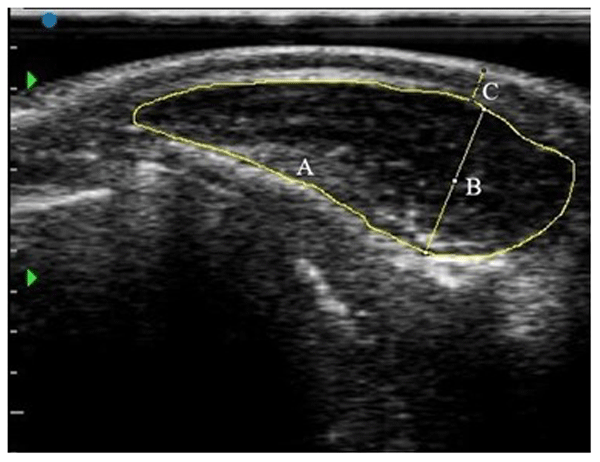
It was detected that Texel and myostatin-carrying BC1 lambs were significantly higher than Pırlak and non-carrying BC1 lambs in the MLD area at weaning. Myostatin-carrying BC1 lambs had a superiority to Pırlak lambs in terms of muscle conformation and fatness of the hind leg. Myostatin-carrying BC1 lambs were found to be better than Pırlak in growth performance. It was concluded that the Pırlak lambs may be improved by introgression of myostatin mutation.
It was detected that Texel and myostatin-carrying BC1 lambs were significantly higher than...