Articles | Volume 68, issue 4
https://doi.org/10.5194/aab-68-731-2025
© Author(s) 2025. This work is distributed under
the Creative Commons Attribution 4.0 License.
https://doi.org/10.5194/aab-68-731-2025
© Author(s) 2025. This work is distributed under
the Creative Commons Attribution 4.0 License.
Nutritional application of olive pomace in dairy animals: chemical composition, implications for milk quality and yield, nutrient digestibility, economics, and limitations

Rana Muhammad Bilal
Department of Animal Nutrition, Cholistan University of Veterinary and Animal Sciences, Near DHA, Bahawalpur 63100, Pakistan
Hassan A. Rudayni
Department of Biology, College of Science, Imam Mohammad Ibn Saud Islamic University (IMSIU), Riyadh 11623, Saudi Arabia
Faiz Ul Hassan
Department of Breeding and Genetics, Cholistan University of Veterinary and Animal Sciences, Near DHA, Bahawalpur 63100, Pakistan
Muhammad Uzair Akhtar
Department of Animal Nutrition, Cholistan University of Veterinary and Animal Sciences, Near DHA, Bahawalpur 63100, Pakistan
Kashif Prince
Department of Medicine, Cholistan University of Veterinary and Animal Sciences, Bahawalpur 63100, Pakistan
Abdullah S. Alawam
Department of Biology, College of Science, Imam Mohammad Ibn Saud Islamic University (IMSIU), Riyadh 11623, Saudi Arabia
Ahmed A. Allam
Department of Biology, College of Science, Imam Mohammad Ibn Saud Islamic University (IMSIU), Riyadh 11623, Saudi Arabia
Mayada Ragab Farag
Forensic Medicine and Toxicology Department, Veterinary Medicine Faculty, Zagazig University, Zagazig 44519, Egypt
Asmaa F. Khafaga
Department of Pathology, College of Veterinary Medicine, King Faisal University, Al-Ahsa 31982, Saudi Arabia
Ayman E. Taha
Department of Public Health, College of Veterinary Medicine, King Faisal University, Al-Ahsa 31982, Saudi Arabia
Mahmoud Alagawany
CORRESPONDING AUTHOR
Poultry Department, Agriculture Faculty, Zagazig University, Zagazig 44511, Egypt
Related authors
No articles found.
Mohammed E. Ghonime, Fathy Abdelazeem, Reham A. M. Ali, Mohamed M. Hamed, Waleed A. Hassan, Layla A. Almutairi, Mohammed A. Alqahtani, Suad H. Almasoudi, and Mahmoud Alagawany
Arch. Anim. Breed., 68, 531–539, https://doi.org/10.5194/aab-68-531-2025, https://doi.org/10.5194/aab-68-531-2025, 2025
Short summary
Short summary
The present study evaluated the effects of fennel seed meal (FSM) on performance, carcass characteristics, lengths of digestive tract parts (cm), intestinal enzyme activity, intestinal microbiology, blood parameters, and economic efficiency in broiler chickens. It is concluded that fennel seed meal can be used in up to 20 % of broiler chicken diets to reduce feed costs without adverse effects on broilers' growth performance and public health.
Ibrahim T. El-Ratel, Khaled H. El-Kholy, Soma M. Elgmmal, Sara Fikry Fouda, Abdel-Khalek E. Abdel-Khalek, Mahmoud A. Hassan, Mahmoud M. Azzam, Mahmoud Alagawany, and Antonia Lestingi
Arch. Anim. Breed., 68, 43–55, https://doi.org/10.5194/aab-68-43-2025, https://doi.org/10.5194/aab-68-43-2025, 2025
Short summary
Short summary
This study evaluated the impacts of selenium nanoparticles (SeNPs), zinc oxide nanoparticles (ZnONPs), and a combination of SeNPs and chromium (Cr) or ZnONPs and Cr on growth, caecal microbiota, antioxidant capacity in blood and liver tissue, and inflammatory cytokines in heat-stressed rabbits. SeNPs or ZnONPs with chromium can be recommended as an effective intervention to mitigate the negative impacts of heat stress by enhancing growth and immunity and promoting metabolic processes.
Fayiz M. Reda, Ayman S. Salah, Youssef A. Attia, Rashed A. Alhotan, Mohamed A. Mahmoud, Alessandro Di Cerbo, and Mahmoud Alagawany
Arch. Anim. Breed., 67, 445–454, https://doi.org/10.5194/aab-67-445-2024, https://doi.org/10.5194/aab-67-445-2024, 2024
Short summary
Short summary
The goal of the current study was to determine how dietary black pepper oil (BPO) supplementation affected growth performance, characteristics of growing quails' immunity, antioxidant status, and carcass yield. In conclusion, dietary BPO supplementation in Japanese quails' diet can boost growth performance and antioxidant indices, enhance lipid profile and carcass traits, and reduce intestinal infections.
Nouran Elsayed, Abd Elrahman E. Mandour, Mamdouh K. A. Amin, Fayiz M. Reda, Heba S. A. Taha, Alessandro Di Cerbo, Mahmoud M. Azzam, and Mahmoud Alagawany
Arch. Anim. Breed., 67, 285–295, https://doi.org/10.5194/aab-67-285-2024, https://doi.org/10.5194/aab-67-285-2024, 2024
Short summary
Short summary
It was suggested that the start codon targeted (SCoT) markers may be more effective than inter-simple sequence repeat (ISSR) for differentiating and identifying the genetic variations within investigated breeds. Also, the usage of molecular markers of SCoT and ISSR may be more proper for calculating genetic diversity and common ancestry among tested rabbit breeds.
Ibrahim T. El-Ratel, Mahmoud H. EL-Deep, Nada K. Alharbi, Worood A. A. Alyoubi, Khaled H. El-Kholy, Ahmed A. Badawy, Ahmed Ezzat Ahmed, Mohammed F. M. El Basuini, Mahmoud Alagawany, and Sara F. Fouda
Arch. Anim. Breed., 67, 185–195, https://doi.org/10.5194/aab-67-185-2024, https://doi.org/10.5194/aab-67-185-2024, 2024
Short summary
Short summary
The present study aimed to evaluate the impact of dietary lysozyme levels on the growth performance, hematological and blood biochemical parameters, immunity, antioxidant capacity, and intestinal microbial count in broiler chickens. In conclusion, chicken egg lysozyme (50 mg kg−1), a promising alternative for antibiotics in broiler chickens' diet, can enhance growth performance, antioxidant status, immunity, and intestinal microbiota.
Mohammed H. Alzawqari, Mustafa Shukry Atta, Abdallah Metwally, Shaimaa Selim, Mohammad A. M. Wadaan, In Ho Kim, Sungbo Cho, Hossam M. Eltahan, Mahmoud Alagawany, Rashed A. Alhotan, Ali R. Al Sulaiman, Elsayed Osman Hussein, and Ahmed A. Saleh
Arch. Anim. Breed., 66, 451–460, https://doi.org/10.5194/aab-66-451-2023, https://doi.org/10.5194/aab-66-451-2023, 2023
Short summary
Short summary
This study aimed to show the effect of bile acid (BA) and xylanase (Xyl) supplementation on growth, fat digestibility, serum lipid metabolites, and ileal digesta viscosity of broilers fed wheat and tallow in their diets. The results of this trial revealed that the supplementation of Xyl significantly reduced the ileal digesta viscosity, and the supplementation of BA significantly increased the attention of serum lipid metabolites.
Alaa E. Elkomy, Amina S. El-Saadany, Effat Y. Shreif, Amal A. Bayoumi, Marwa H. Abd El-Maged, Mahmoud Alagawany, Ahmed A. Saleh, Sungbo Cho, In Ho Kim, and Hossam M. Eltahan
Arch. Anim. Breed., 66, 379–390, https://doi.org/10.5194/aab-66-379-2023, https://doi.org/10.5194/aab-66-379-2023, 2023
Short summary
Short summary
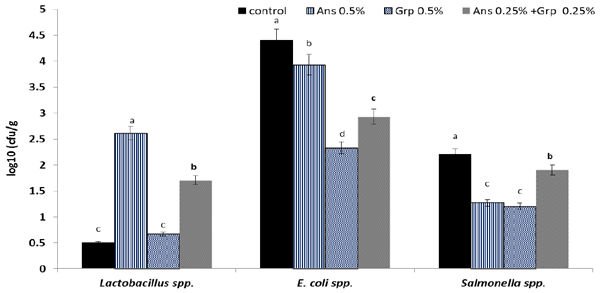
This trial was performed to determine the effect of anise (Ans) and grape seed (Grp) oil inclusion in diets of Japanese quail on performance, carcasses, blood parameters, antioxidant activity, and hematological blood structure. It is concluded that Ans and Grp seed oils could be used as valuable essential oils in quails’ diets to stimulate the performance and immune response, enhance antioxidant activity, and reduce caecal pathogenic microbes.
Cited articles
Abbeddou, S., Rischkowsky, B., Hilali, M. E. D., Hess, H. D., and Kreuzer, M.: Influence of feeding Mediterranean food industry by-products and forages to Awassi sheep on physicochemical properties of milk, yoghurt and cheese, J. Dairy Res., 78, 426–435, https://doi.org/10.1017/S0022029911000665, 2011.
Abdelhamid, G. G., Abouel–Yazeed, A. M., Abu-Tor E. M., Nassar, M. A. A., and Aboufarrag, H. T.: Chemical studies on olive pomace and seeds as a by-product from olive oil extraction, Alex. Sci. Exchange J., 46, 581-588, https://doi.org/10.21608/asejaiqjsae.2025.444178, 2025.
Abd El-Galil, K. A.: Utilization of olive pulp meal as a nontraditional feedstuff in growing local hens feeding under desert conditions, Egypt. Poult. Sci. J., 37, https://doi.org/10.21608/epsj.2017.5610, 2017.
Abid, K., Jabri, J., Ammar, H., Said, S. B., Yaich, H., Malek, A., and Kamoun, M.: Effect of treating olive cake with fibrolytic enzymes on feed intake, digestibility and performance in growing lambs, Anim. Feed Sci. Technol., 261, 114405, https://doi.org/10.1016/j.anifeedsci.2020.114405, 2020.
Afsari, M., Mohebbifar, A., and Torki, M.: Effects of phytase supplementation of low phosphorous diets included olive pulp and date pits on productive performance of laying hens, egg quality traits and some blood parameters, Annu. Res. Rev. Biol., 3, 777–793, https://journalarrb.com/index.php/ARRB/article/view/685, 2013.
Al-Harthi, M. A.: The efficacy of using olive cake as a by-product in broiler feeding with or without yeast, Ital. J. Anim. Sci., 15, 512–520, https://doi.org/10.1080/1828051X.2016.1194173, 2016.
Al-Harthi, M. A. and Attia, Y. A.: Effect of citric acid on the nutritive value of olive cake in broiler diets, Eur. Poult. Sci., 80, 1612–1619, https://doi.org/10.4081/ijas.2015.3966, 2016.
Aljamal, A. E., Obeidat, B. S., and Obeidat, M. D.: Lactation performance of Awassi ewes fed diets containing either Atriplex halimus L. or olive cake, Ital. J. Anim. Sci., 20, 426–432, https://doi.org/10.1080/1828051X.2021.1886002, 2021.
Al Jassim, R. A. M., Awadeh, F. T., and Abodabos, A.: Supplementary feeding value of urea-treated olive cake when fed to growing Awassi lambs, Animal Feed Science and Technology, 64, 287–292, https://doi.org/10.1016/S0377-8401(96)01044-9, 1997.
Amato, A., Liotta, L., Cavallo, C., Randazzo, C. L., Pino, A., Bonacci, S., and Lopreiato, V.: Effects of feeding enriched-olive cake on milk quality, metabolic response, and rumen fermentation and microbial composition in mid-lactating Holstein cows, Ital. J. Anim. Sci., 23, 1069–1090, https://doi.org/10.1080/1828051X.2024.2381736, 2024.
Awawdeh, M. S. and Obeidat, B. S.: Treated olive cake as a non-forage fiber source for growing Awassi lambs: Effects on nutrient intake, rumen and urine pH, performance, and carcass yield, Asian-Australas. J. Anim. Sci., 26, 661–667, https://doi.org/10.5713/ajas.2012.12513, 2013.
Benincasa, C., Pellegrino, M., Veltri, L., Claps, S., Fallara, C., and Perri, E.: Dried destoned virgin olive pomace: A promising new by-product from pomace extraction process, Molecules, 26, 4337, https://doi.org/10.3390/molecules26144337, 2021.
Bilal, R. M., Liu, C., Zhao, H., Wang, Y., Farag, M. R., Alagawany, M., Hassan, F., Elnesr, S. S., Elwan, H. A. M., Qiu, H., and Lin, Q.: Olive oil: Nutritional applications, beneficial health aspects and its prospective application in poultry production, Front. Pharmacol., 12, 723040, https://doi.org/10.3389/fphar.2021.723040, 2021.
Carboni, A., Cabizza, R., Urgeghe, P. P., Fancello, F., Zara, S., and Del Caro, A.: Effects of olive pomace powder incorporation on physicochemical, textural, and rheological properties of sheep milk yogurt, Foods, 14, 3118, https://doi.org/10.3390/foods14173118, 2025.
Castellani, F., Vitali, A., Bernardi, N., Marone, E., Palazzo, F., Grotta, L., and Martino, G.: Dietary supplementation with dried olive pomace in dairy cows modifies the composition of fatty acids and the aromatic profile in milk and related cheese, J. Dairy Sci., 100, 8658–8669, https://doi.org/10.3168/jds.2017-12899, 2017.
Chaves, B. W., Valles, G. A. F., Scheibler, R. B., Schafhauser Junior, J., and Nornberg, J. L.: Milk yield of cows submitted to different levels of olive pomace in the diet, Acta Sci. Anim. Sci., 43, e51158, https://doi.org/10.4025/actascianimsci.v43i1.51158, 2021.
Chilliard, Y. and Ferlay, A.: Dietary lipids and forages interactions on cow and goat milk fatty acid composition and sensory properties, Reprod. Nutr. Dev., 44, 467–492, https://doi.org/10.1051/rnd:2004052, 2004.
Chilliard, Y., Glasser, F., Ferlay, A., Bernard, L., Rouel, J., and Doreau, M.: Diet, rumen biohydrogenation and nutritional quality of cow and goat milk fat, Eur. J. Lipid Sci. Technol., 109, 828–855, https://doi.org/10.1002/ejlt.200700080, 2007.
Chiofalo, B., Liotta, L., Zumbo, A., and Chiofalo, V.: Administration of olive cake for ewe feeding: effect on milk yield and composition, Small Rumin. Res., 55, 169–176, https://doi.org/10.1016/j.smallrumres.2003.12.011, 2004.
de Oliveira, C. O., Roll, A. A. P., Medeiros Gonçalves, F. M., Lopes, D. C. N., and Xavier, E. G.: Olive pomace for the feeding of commercial poultry: effects on performance, meat and eggs quality, haematological parameters, microbiota and immunity, World's Poult. Sci. J., 77, 363–376, https://doi.org/10.1016/j.wpsj.2021.04.003, 2021.
El-Moneim, A. E. A. and Sabic, E. M.: Beneficial effect of feeding olive pulp and Aspergillus awamori on productive performance, egg quality, serum/yolk cholesterol and oxidative status in laying Japanese quails, J. Anim. Feed Sci., 28, 52–61, https://doi.org/10.22358/jafs/105537/2019, 2019.
Estaún, J., Dosil J., Al, A. A., Gimeno A., and de Vega, A.: Effects of including olive cake in the diet on performance and rumen function of beef cattle, Animal Production Science, 54, 1817–1821, https://doi.org/10.1071/AN14352, 2014.
Faye, B., Konuspayeva, G., Narmuratova, M., Musaad, A. M., and Mehri, H.: Effect of crude olive cake supplementation on camel milk production and fatty acid composition. Dairy Sci. Technol., 93, 225–239. https://doi.org/10.1007/s13594-013-0117-6, 2013.
García, A. M., Moumen, A., Ruiz, D. Y., and Alcaide, E. M.: Chemical composition and nutrients availability for goats and sheep of two-stage olive cake and olive leaves. Anim. Feed Sci. Technol., 107, 61–74, https://doi.org/10.1016/S0377-8401(03)00075-9, 2003.
Ghanbari, R., Anwar, F., Alkharfy, K. M., Gilani, A. H., and Saari, N.: Valuable nutrients and functional bioactives in different parts of olive (Olea europaea L.) – A review. Int. J. Mole. Sci., 13, 3291–3340, https://doi.org/10.3390/ijms13033291, 2012.
Griinari, J. M., Dwyer, D. A., McGuire, M. A., Bauman, D. E., Palmquist, D. L., and Nurmela, K. V.: Trans-octadecenoic acids and milk fat depression in lactating dairy cows, J. Dairy Sci., 81, 1251–1261, https://doi.org/10.3168/jds.S0022-0302(98)75686-3, 1998.
Hadjipanayiotou, M.: Feeding ensiled crude olive cake to lactating Chios ewes, Damascus goats and Friesian cows, Livest. Prod. Sci., 59, 61–66, https://doi.org/10.1016/S0301-6226(99)00005-6, 1999.
Hamdi, H., Majdoub-Mathlouthi, L., Picard, B., Listrat, A., Durand, D., Znaïdi, I. A., and Kraiem, K.: Carcass traits, contractile muscle properties and meat quality of grazing and feedlot Barbarine lamb receiving or not olive cake, Small Ruminant Res., 145, 85–93, https://doi.org/10.1016/j.smallrumres.2016.01.014, 2016.
Iannaccone, M., Ianni, A., Ramazzotti, S., Grotta, L., Marone, E., and Cichelli, A., and Martino G.: Whole blood transcriptome analysis reveals positive effects of dried olive pomace-supplemented diet on inflammation and cholesterol in laying hens, Animals, 9, 427, https://doi.org/10.3390/ani9070427, 2019.
Ibrahim, N. S., Sabic, E. M., and Abu-Taleb, A. M.: Effect of inclusion irradiated olive pulp in laying quail diets on biological performance, J. Radiat. Res. Appl. Sci., 11, 340–346, https://doi.org/10.1016/j.jrras.2018.06.004, 2019.
Jenkins, T. C., Abu Ghazaleh, A. A., Freeman, S., and Thies, E. J.: The production of 10-hydroxystearic and 10-ketostearic acids is an alternative route of oleic acid transformation by the ruminal microbiota in cattle, J. Nutr., 136, 926–931, https://doi.org/10.1093/jn/136.4.926, 2006.
Jenkins, T. C. and McGuire, M. A.: Major advances in nutrition: Impact on milk composition, J. Dairy Sci., 89, 1302–1310, https://doi.org/10.3168/jds.S0022-0302(06)72113-2, 2006.
Mathabela, K. P., Egbu, C. F., and Mnisi, C. M.: Valorisation of dietary olive pomace with Pleurotus ostreatus spawn on amino acid digestibility, growth performance, physiological responses, and meat quality parameters in Jumbo quail, Discov. Anim., 2, 16, https://doi.org/10.1007/s44338-025-00061-2, 2025.
Mele, M., Serra, A., Pauselli, M., Luciano, G., Lanza, M., Pennisi, P., and Morbidini, L.: The use of stoned olive cake and rolled linseed in the diet of intensively reared lambs: Effect on the intramuscular fatty-acid composition, Animal, 8, 152–162, https://doi.org/10.1017/S1751731113001924, 2014.
Mohammadabadi, T., Amindavar, S., and Chaji, M.: Dietary supplementation of olive pomace in lactating buffaloes: Effects on milk and yogurt composition and fatty acid profile toward heart health, Angiol. Open Access., 13, 539, https://doi.org/10.35841/2329-9495.25.13.539, 2025.
Molina-Alcaide, E., Ruiz, D. Y., Moumen, A., and García, I. M.: Chemical composition and nitrogen availability for goats and sheep of some olive by-products, Small Rumin. Res., 49, 329–336, https://doi.org/10.1016/S0921-4488(03)00148-2, 2003.
Molina-Alcaide, E., Morales-García, E. Y., Martín-García, A. I., Ben Salem, H., Nefzaoui, A., and Sanz-Sampelayo, M. R.: Effects of partial replacement of concentrate with feed blocks on nutrient utilization, microbial N flow, and milk yield and composition in goats, J. Dairy Sci., 93, 2076–2087, https://doi.org/10.3168/jds.2009-2628, 2010.
Molina-Alcaide, E. and Yáñez-Ruiz, D. R.: Potential use of olive by-products in ruminant feeding: A review, Anim. Feed Sci. Technol., 147, 247–264, https://doi.org/10.1016/j.anifeedsci.2007.09.021, 2008.
Mosley E. E., Shafii, B., Moate, P.J., and McGuire M. A.: cis-9, trans-11 Conjugated Linoleic Acid Is Synthesized Directly from Vaccenic Acid in Lactating Dairy Cattle12, J. Nutr., 136, 570–575, https://doi.org/10.1093/jn/136.3.570, 2006.
Nagarajaiah, S. B. and Prakash, J.: Chemical composition and bioactivity of pomace from selected fruits, Int. J. Fruit Sci., 16, 423–443, https://doi.org/10.1080/15538362.2016.1143433, 2016.
Nanas, I., Giannoulis, T., Dovolou, E., Giannenas, I., and Amiridis, G. S.: Impact of low inclusion rate of olive cake in dairy cow rations on uterine health and fertility indices during early lactation, Animals, 15, 269, https://doi.org/10.3390/ani15020269, 2025.
Nasopoulou, C., Lytoudi, K., and Zabetakis, I.: Evaluation of olive pomace in the production of novel broilers with enhanced in vitro antithrombotic properties, Eur. J. Lipid Sci. Technol., 120, 1700290, https://doi.org/10.1002/ejlt.201700290, 2018.
Neofytou, M. C., Miltiadou, D., Sfakianaki, E., Constantinou, C., Symeou, S., Sparaggis, D., and Tzamaloukas, O.: The use of ensiled olive cake in the diets of Friesian cows increases beneficial fatty acids in milk and Halloumi cheese and alters the expression of SREBF1 in adipose tissue, J. Dairy Sci., 103, 8998–9011, https://doi.org/10.3168/jds.2020-18235, 2020.
Nudda, A., McGuire, M. A., Battacone, G., and Pulina, G.: Seasonal variation in conjugated linoleic acid and vaccenic acid in milk fat of sheep and its transfer to cheese and ricotta, J. Dairy Sci., 88, 1311–1319, https://doi.org/10.3168/jds.S0022-0302(05)72797-1, 2005.
Nunes, M. A., Palmeira, J. D., Melo, D., Machado, S., Lobo, J. C., Costa, A. S. G., Alves, R. C., Ferreira, H., and Oliveira, M. B. P. P.: Chemical composition and antimicrobial activity of a new olive pomace functional ingredient, Pharmaceuticals, 14, 913, https://doi.org/10.3390/ph14090913, 2021.
Obeidat, B. S. and Kridli, R. T.: Olive cake in livestock nutrition, Jordan J. Agric. Sci., 17, 187–197, https://doi.org/10.35516/jjas.v17i3.78, 2021.
Obeidat, B. S., Kridli, R. T., Mahmoud, K. Z., Obeidat, M. D., Haddad, S. G., Subih, H. S., and Al-Khazáleh, J. M.: Replacing soybean meal with sesame meal in the diets of lactating Awassi ewes suckling single lambs: nutrient digestibility, milk production, and lamb growth, Animals, 9, 157, https://doi.org/10.3390/ani9040157, 2019.
Omar, J. M. A., Daya, R., and Ghaleb, A.: Effects of different forms of olive cake on the performance and carcass quality of Awassi lambs, Anim. Feed Sci. Technol., 171, 167–172, https://doi.org/10.1016/j.anifeedsci.2011.11.002, 2012.
Owaimer, A. N., Kraidees, M. S., Al-Saiady, M., Zahran, S., and Abouheif, M. A.: Effect of feeding olive cake in complete diet on performance and nutrient utilization of lambs, Asian-Australas, J. Anim. Sci., 17, 491–496, https://doi.org/10.5713/ajas.2004.491, 2004.
Paié-Ribeiro, J., Baptista, F., Teixeira, J., Guedes, C., Gomes, M. J., Teixeira, A., Barros, A. N., Pinheiro, V., and Outor-Monteiro, D.: From waste to resource: Compositional analysis of olive cake's fatty acids, nutrients and antinutrients, Appl. Sci., 14, 5586, https://doi.org/10.3390/app14135586, 2024.
Paié-Ribeiro, J., Pinheiro, V., Guedes, C., Gomes, M. J., Teixeira, J., Teixeira, A., and Outor-Monteiro, D.: From waste to sustainable animal feed: Incorporation of olive oil by-products into the diet of Bísaro breed pigs, Sustainability, 17, 3174, https://doi.org/10.3390/su17073174, 2025.
Pallara, G., Buccioni, A., Pastorelli, R., Minieri, S., Mele, M., Rapaccini, S., Messini, A., Pauselli, M., Servili, M., Giovannetti, L., and Viti, C.: Effect of stoned olive pomace on rumen microbial communities and polyunsaturated fatty acid biohydrogenation: An in vitro study, BMC Vet. Res., 10, 271, https://doi.org/10.1186/s12917-014-0271-y, 2014.
Papadomichelakis, G., Pappas, A. C., Tsiplakou, E., Symeon, G. K., Sotirakoglou, K., and Mpekelis, V., Fegeros, K., and Zervas, G.: Effects of dietary dried olive pulp inclusion on growth performance and meat quality of broiler chickens, Livest. Sci., 221, 115–122, https://doi.org/10.1016/j.livsci.2019.01.023, 2019.
Pappas, A. C., Tsiplakou, E., Papadomichelakis, G., Mitsiopoulou, C., Haroutounian, S. A., Fegeros, K., and Zervas, G.: Effects of olive pulp addition to broiler diets on performance, selected biochemical parameters and antioxidant enzymes, J. Hell. Vet. Med. Soc., 70, 1687–1696, https://doi.org/10.12681/jhvms.21793, 2019.
Quero, J., Ballesteros, L. F., Ferreira-Santos, P., Velderrain-Rodriguez, G. R., Rocha, C. M. R., Pereira, R. N., Teixeira, J. A., Martin-Belloso, O., Osada, J., and Rodríguez-Yoldi, M. J.: Unveiling the antioxidant therapeutic functionality of sustainable olive pomace active ingredients, Antioxidants, 11, 828, https://doi.org/10.3390/antiox11050828, 2022.
Rebollada-Merino, A., Bárcena, C., Ugarte-Ruiz, M., Porras, N., Mayoral-Alegre, F.J., Tóme-Sánchez, I., Domínguez, L., and Rodríguez-Bertos, A.: Effects on intestinal mucosal morphology, productive parameters and microbiota composition after supplementation with fermented defatted alperujo (FDA) in laying hens, Antibiotics, 8, 215, https://doi.org/10.3390/antibiotics8040215, 2019.
Ryan, D., Antolovich, M., Prenzler, P., Robards, K., and Lavee, S.: Biotransformations of phenolic compounds in Olea europaea L., Sci. Hortic., 92, 147–176, https://doi.org/10.1016/S0304-4238(01)00287-4, 2002.
Sadeghi, H., Yansari, A., and Ansari-Pirsarai, Z.: Effects of different olive cake by-products on dry matter intake, nutrient digestibility, and performance of Zel sheep, Int. J. Agric. Biol., 11, 39–43, ISSN 1814-9596, 2009.
Schú, A. I., Righi, D. C. B. F., Marcuzzo, N. P., Souza, O. F., Stefanello, C., Speroni, C. S., Cordeiro, M. W. S., Pozzatti, M., Pinton, M. B., Wagner, R., Morais, Z. C., Campagnol, P. C. B., da Rosa, C. S., and Dalla Nora, F. M.: Exploring the benefits of olive pomace in poultry nutrition: Effects on egg quality and composition, J. Food Compos. Anal., 145, 107789, https://doi.org/10.1016/j.jfca.2025.107789, 2025.
Scicutella, F., Cucu, M. A., Mannelli, F., Pastorelli, R., Daghio, M., Paoli, P., Pazzagli, L., Turini, L., Mantino, A., Luti, S., Genovese, M., Viti, C., and Buccioni, A.: Rumen microbial community and milk quality in Holstein lactating cows fed olive oil pomace as part in a sustainable feeding strategy, Animal, 17, 100815, https://doi.org/10.1016/j.animal.2023.100815, 2023.
Sevillano, F., Blanch, M., Pastor, J. J., Ibáñez, M. A., and Menoyo, D.: Effects of olive pomace and spice extracts on performance and antioxidant function in broiler chickens, Animals, 15, 808, https://doi.org/10.3390/ani15060808, 2025.
Sucu, E., Akbay, K. C., Şengül, Ö. M. E. R., Yavuz, M. T., and AK, İ.: Effects of stoned olive pomace on carcass characteristics and meat quality of lambs, Turk. J. Vet. Anim. Sci., 42, 533–542, https://doi.org/10.3906/vet-1702-52, 2018.
Terramoccia, S., Bartocci, S., Taticchi, A., Di Giovanni, S., Pauselli, M., Mourvaki, E., Urbani, S., and Servili, M.: Use of dried stoned olive pomace in the feeding of lactating buffaloes: Effect on the quantity and quality of the milk produced, Asian-Australas, J. Anim. Sci., 26, 971–980, https://doi.org/10.5713/ajas.2012.12627, 2013.
Tufarelli, V., Introna, M., Cazzato, E., Mazzei, D., and Laudadio, V.: Suitability of partly destoned exhausted olive cake as by-product feed ingredient for lamb production, J. Anim. Sci., 91, 872–877, https://doi.org/10.2527/jas.2012-5541, 2013.
Tzamaloukas, O., Neofytou, M. C., and Simitzis, P. E.: Application of olive by-products in livestock with emphasis on small ruminants: Implications on rumen function, growth performance, milk and meat quality, Animals, 11, 531, https://doi.org/10.3390/ani11020531, 2021.
Vargas-Bello-Pérez, E., Vera, R. R., Aguilar, C., Lira, R., Peña, I., and Fernández, J.: Feeding olive cake to ewes improves fatty acid profile of milk and cheese, Anim. Feed Sci. Technol., 184, 94–99, https://doi.org/10.1007/s11250-021-02674-7, 2013.
Vasta, V., Yáñez-Ruiz, D. R., Mele, M., Serra, A., Luciano, G., Lanza, M., Biondi, L., and Priolo, A.: Bacterial and protozoal communities and fatty acid profile in the rumen of sheep fed a diet containing added tannins, Appl. Environ. Microbiol., 76, 2549–2555, https://doi.org/10.1128/AEM.02583-09, 2010.
Yáñez-Ruiz, D. R. and Molina-Alcaide, E.: A comparative study of the effect of two-stage olive cake added to alfalfa on digestion and nitrogen losses in sheep and goats, Animal, 1, 227–232, https://doi.org/10.1017/S1751731107340032, 2007.
Zarei, M., Ehsani, M., and Torki, M.: Productive performance of laying hens fed wheat-based diets included olive pulp with or without a commercial enzyme product, Afr. J. Biotechnol., 10, 4303–4312, 2011.
Zilio, D. M., Bartocci, S., Di Giovanni, S., Servili, M., Chiariotti, A., and Terramoccia, S.: Evaluation of dried stoned olive pomace as supplementation for lactating Holstein cattle: Effect on milk production and quality, Anim. Prod. Sci., 55, 185–188, https://doi.org/10.1071/AN14254, 2014.
Short summary
This review mainly focuses on the effects of olive pomace inclusion in animal feed on milk production, growth performance, nutrient digestibility, feed efficiency, and health status of the animals. Overall, dietary olive pomace resulted in satisfactory response of the animals in terms of its addition in diets as a cheap nutrient source and improved quality of animal products.
This review mainly focuses on the effects of olive pomace inclusion in animal feed on milk...