Articles | Volume 66, issue 4
https://doi.org/10.5194/aab-66-439-2023
© Author(s) 2023. This work is distributed under
the Creative Commons Attribution 4.0 License.
https://doi.org/10.5194/aab-66-439-2023
© Author(s) 2023. This work is distributed under
the Creative Commons Attribution 4.0 License.
The effect of breed and body weight at slaughter on histochemical muscle fiber characteristics and meat quality of longissimus lumborum and semitendinosus lamb muscles
Institute of Animal Sciences, Warsaw University of Life Sciences-SGGW, Ciszewskiego St. 8, 02-786 Warsaw, Poland
Aurelia Radzik-Rant
Institute of Animal Sciences, Warsaw University of Life Sciences-SGGW, Ciszewskiego St. 8, 02-786 Warsaw, Poland
Related authors
Marta Iwaszkiewicz, Aurelia Radzik-Rant, Katarzyna Czyż, Anna Wyrostek, and Witold Rant
Arch. Anim. Breed., 69, 117–127, https://doi.org/10.5194/aab-69-117-2026, https://doi.org/10.5194/aab-69-117-2026, 2026
Short summary
Short summary
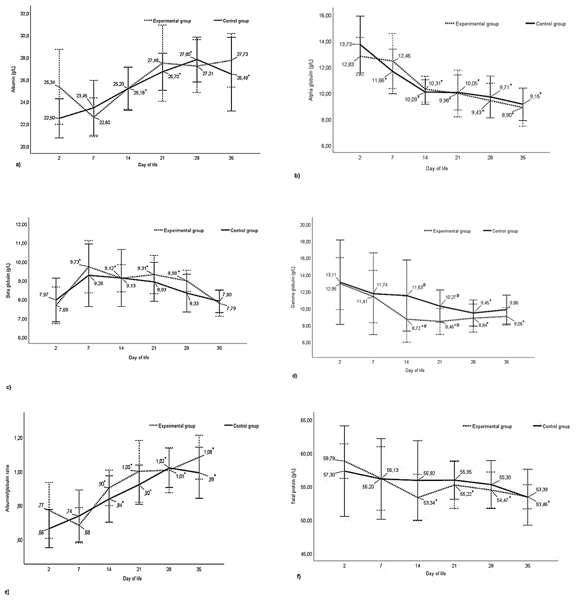
The study examined the effect of the human handling of newborn calves on their development and immune system efficiency. Holstein-Friesian calves in one group were licked after birth by the mother, whereas the other group were handled by a human. Daily gains were controlled, and blood was collected for protein fractions and complete blood count analysis. The replacement of natural maternal care (licking) of a newborn calf by a human did not adversely affect the development and health of the calf.
Ewa Kuźnicka, Katarzyna Stempke, Aurelia Radzik-Rant, and Witold Rant
Arch. Anim. Breed., 67, 401–407, https://doi.org/10.5194/aab-67-401-2024, https://doi.org/10.5194/aab-67-401-2024, 2024
Short summary
Short summary
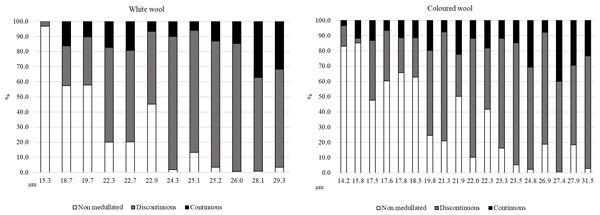
The aim of the research was to compare the thickness and the medullation of white and coloured wool from alpacas of different ages. The colour of the wool did not significantly affect the thickness and degree of medullation of the alpaca wool. Discontinuous medullas are found even in very fine hair. With age, the mean fibre diameter increased; the share of non-medullated fibres in the fleece decreased; and the share of medullated fibres, especially those with an discontinuous medulla, increased.
Marta Iwaszkiewicz, Aurelia Radzik-Rant, Katarzyna Czyż, Anna Wyrostek, and Witold Rant
Arch. Anim. Breed., 69, 117–127, https://doi.org/10.5194/aab-69-117-2026, https://doi.org/10.5194/aab-69-117-2026, 2026
Short summary
Short summary
The study examined the effect of the human handling of newborn calves on their development and immune system efficiency. Holstein-Friesian calves in one group were licked after birth by the mother, whereas the other group were handled by a human. Daily gains were controlled, and blood was collected for protein fractions and complete blood count analysis. The replacement of natural maternal care (licking) of a newborn calf by a human did not adversely affect the development and health of the calf.
Ewa Kuźnicka, Katarzyna Stempke, Aurelia Radzik-Rant, and Witold Rant
Arch. Anim. Breed., 67, 401–407, https://doi.org/10.5194/aab-67-401-2024, https://doi.org/10.5194/aab-67-401-2024, 2024
Short summary
Short summary
The aim of the research was to compare the thickness and the medullation of white and coloured wool from alpacas of different ages. The colour of the wool did not significantly affect the thickness and degree of medullation of the alpaca wool. Discontinuous medullas are found even in very fine hair. With age, the mean fibre diameter increased; the share of non-medullated fibres in the fleece decreased; and the share of medullated fibres, especially those with an discontinuous medulla, increased.
Aurelia Radzik-Rant and Karolina Wiercińska
Arch. Anim. Breed., 64, 157–165, https://doi.org/10.5194/aab-64-157-2021, https://doi.org/10.5194/aab-64-157-2021, 2021
Short summary
Short summary
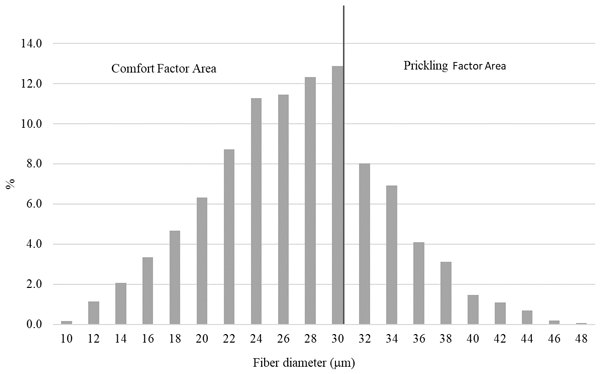
In this work, alpaca wool thickness and medullation characteristics were analyzed based on the animals' sex and color. The wool of females was thinner and had a lower medullation percentage than for males. The share of non-medullated fibers in the area up to 30 µm was also greater in the wool of females than for males. Light wool was thinner and had a lower degree of medullation than dark wool. The discontinuous and continuous medullated light fibers were thinner than those of dark fibers.
Cited articles
AMSA: Meat Color Measurement Guidelines, American Meat Science Association, Champaign-Urbana, IL, USA, https://meatscience.org/publications-resources/printed-publications (last access: 28 June 2023), 2012.
Ashmore, C. R., Thompkins, G., and Doerr, L.: Postnatal development of muscle fiber types in domestic animals, J. Anim. Sci., 34, 37–41, 1972.
Borys, B., Wawrzyńska, M., Elminowska-Wenda, G., and Szewczyk, A.: Characteristics of m. longissimus lumborum microstructure and slaughter value and meat quality of lambs of different breeds, Ann. Anim. Sci., 5, 307–317, 2005.
Briand, M., Talmant, A., Briand, Y., Monin, G., and Durand, R.: Metabolic types of muscle in the sheep: I. Myosin ATPase, glycolytic and mitochondrial enzyme activities, Eur. J. Appl. Physiol., 46, 347–358, https://doi.org/10.1007/BF00422122, 1981.
Bunger, L., Navajas, E. A., Stevenson, L., Lambe, N. R., Maltin, C. A., Simm, G., Fisher, A. V., and Chang, K. C.: Muscle fiber characteristics of two contrasting sheep breeds: Scottish Blackface and Texel, Meat Sci., 81, 372–381, https://doi.org/10.1016/j.meatsci.2008.08.017, 2009.
Canepari, M., Pellegrino, M. A., D'antona, G., and Bottinelli, R.: Skeletal muscle fiber diversity and the underlying mechanisms, Acta Physiol., 199, 465–476, https://doi.org/10.1111/j.1748-1716.2010.02118.x, 2010.
Carson, A. F., Moss, B. W., Dawson, L. E., and Kilpatrik, D. J.: Effects of genotype and dietary forage to concentrate ratio during the finishing period on carcass characteristics and meat quality of lambs from hill sheep systems, J. Agr. Sci., 137, 205–220, 2001.
Choi, Y. M. and Kim, B. C.: Muscle fiber characteristics, myofibrillar protein isoforms, and meat quality, Livest. Sci., 122, 105–118, https://doi.org/10.1016/j.livsci.2008.08.015, 2009.
Choi, Y. M., Ryu, Y. C., and Kim, B. C.: Effect of myosin heavy chain isoforms on muscle fiber characteristics and meat quality in porcine longissimus muscle, J. Muscle Foods, 17, 413–427, https://doi.org/10.1111/j.1745-4573.2006.00060.x, 2006.
Cloete, J. J. E., Hoffman, L. C., and Cloete, S. W. P.: A comparison between slaughter traits and meat quality of various sheep breeds: wool, dual-purpose and mutton, Meat Sci., 91, 318–324, https://doi.org/10.1016/j.meatsci.2012.02.010, 2012.
De Marzo, D., Nicastro, F., Toteda, F., and Nicastro, A.: Influence of antioxidants to improving meat quality: histochemical characteristics of lamb muscle, Prog. Nutr., 14, 252–256, 2012.
Dubowitz, V., Brooke, M. H., and Neville, H. E.: Muscle Biopsy: A Modern Approach, Saunders Company Ltd., London, ISBN 978-0721632209, 1973.
European Parliament and the Council of the European Union: Directive 2010/63/EU of the European Parliament and of the Council of 22 September 2010 on the protection of animals used for scientific purposes, Off. J. Eur. Union, 33–79, 2010.
Fantová, M., Ptáček, M., Michnová, K., Nohejlová, L., and Ducháček, J.: Histochemical muscle fibre characteristics of German Heath lamb meat, Acta Vet. Brno, 84, 297–303, https://doi.org/10.2754/avb201584030297, 2015.
Furuichi, Y., Goto-Inoue, N., Manabe, Y., Setou, M., Masuda, K., and Fujii, N. L.: Imaging mass spectrometry reveals fiber-specific distribution of acetylcarnitine and contraction-induced carnitine dynamics in rat skeletal muscles, Biochim. Biophys. Acta, 1837, 1699–1706, https://doi.org/10.1016/j.bbabio.2014.05.356, 2014.
Grau, R. and Hamm, R.: Eine einfache Methode zur Bestimmung der Wasserbindung im Muskel, Naturwissenschaften, 40, 29–30, 1953.
Greenwood, P. L., Harden, S., and Hopkins, D. L.: Myofibre characteristics of ovine longissimus and semitendinosus muscles are influenced by sire breed, gender, rearing type, age and carcass weight, Austr. J. Exp. Agr., 47, 1137–1146, https://doi.org/10.1071/EA06324, 2007.
Grześkowiak, E., Strzelecki, J., Borzuta, K., Borys, B., Borys, A., and Lisiak, D.: The influence of sheep breed on the yield of culinary cuts and meat quality of lambs intensively fattened to high weight standards, Anim. Prod. Review, 68, 81–92, 2003 (in Polish).
He, X., Wu, Q., Xue, W., Wu, R., Huang, Y., Chen, L., Han, Y., Wu, J., Borjigin, G., and Sha, R.: Characterization of Type I and Type III Collagen in the Intramuscular Connective Tissue of Wuzhumuqin Sheep, Animals, 13, 395, https://doi.org/10.3390/ani13030395, 2023.
Hopkins, D. L., Hegarty, R. S., Walker, P. J., and Pethick, D. W.: Relationship between animal age, intramuscular fat, cooking loss, pH, shear force and eating quality of aged meat from sheep, Aust. J. Exp. Agr., 46, 879–884, 2006.
Horak, U. A.: Successive histochemical staining for succinate dehydrogenase and “reversed” ATPase in a single section for the skeletal muscle fiber typing, Histochemistry, 78, 545–553, 1983.
Hou, Y., Su, L., Su, R., Luo, Y., Wang, B., Yao, D., Zhao, L., and Jin, Y.: Effect of feeding regimen on meat quality, MyHC isoforms, AMPK, and PGC-1α genes expression in the biceps femoris muscle of Mongolia sheep, Food Sci. Nutr., 14, 2262–2270, https://doi.org/10.1002/fsn3.1494, 2020.
Huff-Lonergan, E. and Lonergan, S. M.: Mechanisms of water-holding capacity of meat: The role of postmortem biochemical and structural changes, Meat Sci., 71, 194–204, https://doi.org/10.1016/j.meatsci.2005.04.022, 2005.
Jurie, C., Martin, J., Listrat, A., Jailler, R., Culili, J., and Picard, B.: Effect of age and breed of beef bulls on growth parameters, carcass and muscle characteristics, Anim. Sci., 80, 257–263, https://doi.org/10.1079/ASC40710257, 2005.
Kim, G. D., Jeong, J. Y., Jung, E. Y., Yang, H. S., Lim, H. T., and Joo, S. T.: The influence of fiber size distribution of type IIB on carcass traits and meat quality in pigs, Meat Sci., 94, 267–273, https://doi.org/10.1016/j.meatsci.2013.02.001, 2013.
Kłosowska, D. and Fiedler, I.: Muscle fiber types in pigs of different genotypes in relation to meat quality, Anim. Sci. Pap. Rep., 21, 49–60, 2003.
Krichofer, K. S., Calkins, C. B., and Gwartney, B. L.: Fiber type composition of muscles of the beef chunk and round, J. Anim. Sci., 80, 2872–2878, https://doi.org/10.2527/2002.80112872x, 2002.
Lee, S. H., Joo, S. T., and Ryu, Y. C.: Skeletal muscle fiber type and myofibrillar proteins in related to meat quality, Meat Sci., 86, 166–170, https://doi.org/10.1016/j.meatsci.2010.04.040, 2010.
Listrat, A., Lebret, B., Louveau, I., Astruc, T., Bonnet, M., Lefaucheur, L., Picard, B., and Bugeon, J.: How Muscle Structure and Composition Influence Meat and Flesh Quality, Sci. World J., 2016, 3182746, https://doi.org/10.1155/2016/3182746, 2016.
Mancini, R. A. and Hunt, M. C.: Current research in meat color, Meat Sci., 71, 100–121, https://doi.org/10.1016/j.meatsci.2005.03.003, 2005.
Martinez-Cerezo, S., Sañudo, C., Panea, B., Medel, I., Delfa, R., Sierra, I., Beltrán, J. A., Cepero, R., and Olleta, J. L.: Breed, slaughter weight and ageing time effects on physico-chemical characteristics of lamb meat, Meat Sci., 69, 325–333, https://doi.org/10.1016/j.meatsci.2004.08.002, 2005
Młynek, K., Elminowska-Wenda, G., and Guliński, P.: The relationship between microstructure of Longissimus lumborum muscle and carcass quality of bulls slaughtered at three ages, Anim. Sci. Pap. Rep., 24, 57–63, 2006.
Moody, W., Kemp, J., Mahyuddin, M., Johnston, D., and Ely, D.: Effect of feeding system, slaughter weight and sex on histological properties of lamb carcasses, J. Anim. Sci., 50, 249–256, https://doi.org/10.2527/jas1980.502249x, 1980.
Osikowski, M., Porębska, W., and Korman K.: Sheep nutrition standards, in: Nutrition standards for cattle and sheep in the traditional system, edited by: Ryś, R., National Research Institute for Anim. Prod., Kraków, Poland, 27–59, ISBN 83-900-764-2-x, 1998 (in Polish).
Peinando, B., Latorre, R., Váquez-Autón, J. M., Poto, A., Ramírez, G., López-Alborz, O., Moreno, F., and Gil, F.: Histochemical skeletal muscle fibre types in the sheep, Anat. Histol. Embryol., 33, 236–243, https://doi.org/10.1111/j.1439-0264.2004.00545.x, 2004.
Picard, B., Lefaucheur, L., Berri, C., and Duclos, M.: Muscle fiber ontogenesis in farm animal species, Reprod. Nut. Dev., 42, 415–431, https://doi.org/10.1051/rnd:2002035, 2002.
Picard, B., Jurie, C., Duris, M., and Renand, G.: Consequences of selection for higher growth rate on muscle fiber development in cattle, Livest. Sci., 102, 107–120, https://doi.org/10.1016/j.livsci.2005.12.001, 2006.
Prache, S., Schreurs, N., and Guillier, L.: Review: Factors affecting sheep carcass and meat quality attributes, Animal, 16, 100330, https://doi.org/10.1016/j.animal.2021.100330, 2022.
Preziuso, G. and Russo, C.: Meat quality traits of longissimus thoracis, semitendinosus and triceps brachii muscles from Chianina beef cattle slaughtered at two different ages, Ital. J. Anim. Sci., 3, 267–273, https://doi.org/10.4081/ijas.2004.267, 2004.
Radzik-Rant, A., Rant, W., Gajda, M., and Pokrop, A.: The fatty acid profile of muscle tissue of ram lambs with diverse genotypes, Folia Biol. (Kraków), 62, 103–108, 2014.
Rehfeldt, C., Fiedler, I., Dietl, G., and Ender, K.: Myogenesis and postnatal skeletal muscle cell growth as influenced by selection, Livest. Prod. Sci., 66, 177–188, https://doi.org/10.1016/S0301-6226(00)00225-6, 2000.
Reimers, E., Tsegaye, D., Colman, J. E., and Eftestøl, S.: Activity patterns in reindeer with domestic vs. wild ancestry, Appl. Anim. Behav. Sci., 150, 74–84, https://doi.org/10.1016/j.applanim.2013.10.010, 2014.
Rivero, M. A., Hernández-Castellano, L. E., Marta González Cabrera, M. G., Camacho, A., Ripoll, G., Panea, B., Alcalde, M. J., Córdoba, M., Argüello, A., and Castro, N.: Study of the influence of genotype and rearing method on muscle fibre characteristics in suckling goat kids, J. Appl. Anim. Res., 50, 146–151, https://doi.org/10.1080/09712119.2022.2043875, 2022.
Ryu, Y. C. and Kim, B. C.: Comparison of histochemical characteristics in various pork groups categorized by postmortem metabolic rate and pork quality, J. Anim. Sci., 84, 894–901, https://doi.org/10.2527/2006.844894x, 2006.
Ryu, Y. C., Choi, Y., Lee, S., Shin, H., Choe, J., Kim, J., Hong, K., and Kim, B.: Comparing the histochemical characteristics and meat quality traits of different pig breeds, Meat Sci., 80, 363–369, https://doi.org/10.1016/j.meatsci.2007.12.020, 2008.
Sarı, M., Aksoy, Y., Önk, K., Erinç, H., Işık, S. A., and Tilki, M.: Effects of genotype and fattening system on the quality of male lamb meat – Part 1: Technological properties and carcass measurements, Arch. Anim. Breed., 62, 605–614, https://doi.org/10.5194/aab-62-605-2019, 2019.
Sazili, A., Parr, T., Sensky, P., Jones, S., Bardsley, R., and Buttery, P.: The relationship between slow and fast myosin heavy chain content, calpastatin and meat tenderness in different ovine skeletal muscles, Meat Sci., 69, 17–25, https://doi.org/10.1016/j.meatsci.2004.06.021, 2005.
Schiaffino, S. and Reggiani, C.: Fiber types in mammalian skeletal muscles, Physiol. Rev., 91, 1447–1531, https://doi.org/10.1152/physrev.00031.2010, 2011.
Siqin, Q., Nishiumi, T., Yamada, T., Wang, S., Liu, W., Wu, R., and Borjigin, G.: Relationships among muscle fiber type composition, fiber diameter and MRF gene expression in different skeletal muscles of naturally grazing Wuzhumuqin sheep during postnatal development, Anim. Sci. J., 88, 2033–2043, https://doi.org/10.1111/asj.12848, 2017.
Sirin, E., Aksoy, Y., Ugurlu, M., Cicek, Ü., Önenc, A., Ulutas, Z., Seng, U., and Kurang, M.: The relationship between muscle fiber characteristics and some meat quality parameters in Turkish native sheep breeds, Small Ruminant Res., 150, 46–51, https://doi.org/10.1016/j.smallrumres.2017.03.012, 2017.
Solomon, M. B., Kemp, J. D., Moody, W. G., Ely, D. G., and Fox, J. D.: Effect of breed and slaughter weight on physical, chemical and organoleptic properties of lamb carcasses, J. Anim. Sci., 51, 1102–1107, https://doi.org/10.2527/jas1980.5151102x, 1980.
Solomon, M. B., Moody, W. G., Kemp, J. P., and Ely, D. G.: Effect of breed, slaughter weight and sex on histological properties of ovine muscle, J. Anim. Sci., 52, 1019–1021, https://doi.org/10.2527/jas1981.5251019x, 1981.
Souza, D. A., Selaive-Villarroel, A. B., Pereiraa, E. S., Silva, E. M. C., and Oliveirac, R. L.: Effect of the Dorper breed on the performance, carcass and meat traits of lambs bred from Santa Inês sheep, Small Ruminant. Res., 145, 76–80, https://doi.org/10.1016/j.smallrumres.2016.10.017, 2016.
SPSS Base 23.0: Users Guide, SPSS Inc., ftp://public.dhe.ibm.com (last access: 28 June 2023), 2016.
Suzuki, A. and Cassens, R. G.: A histochemical study of myofiber types in the serratus ventralis tho-racis muscle of sheep during growth, J. Anim. Sci., 56, 1447–1458, https://doi.org/10.2527/jas1983.5661447x, 1983.
Therkildsen, M., Larsen, L., and Vestergaard, M.: Influence of growth rate and muscle type on muscle fiber type characteristics, protein synthesis capacity and activity of the calpain system in Friesian calves, Anim. Sci., 74, 243–251, https://doi.org/10.1017/S1357729800052413, 2002.
Tschirhart-Hoelscher, T. E., Baird, B. E., King, D. A., McKenna, R. D., and Savell, J. W.: Physical, chemical, and histological characteristics of 18 lamb muscles, Meat Sci., 73, 48–54, https://doi.org/10.1016/j.meatsci.2005.10.015, 2006.
Velotto, S., Di Prisco, M. R., Stasi, T., and Crasto, A.: Histomorphometrical evaluation of myocyte types in the lambs, Acta Vet. Brno, 74, 175–182, https://doi.org/10.2754/avb200574020175, 2005.
Velotto, S., Varricchio, E., Di Prisco, M. R., Stasi, T., and Crasto, A.: Effect of age and sex on histomorphometrical characteristics of two muscles of Laticuada lambs, Acta Vet. Brno, 79, 3–12, https://doi.org/10.2754/avb201079010003, 2010.
Wegner, J., Albrecht, E., Fiedler, I., Teuscher, F., Papstein, H. J., and Ender, K.: Growth- and breed-related changes of muscle fiber characteristics in cattle, J. Anim. Sci., 78, 1485–1496, https://doi.org/10.2527/2000.7861485x, 2000.
Wojtysiak, D. and Połtowicz, K.: Carcass quality, physicochemical parameters, muscle fiber traits and myosin heavy chain composition of m. longissimus lumborum from Puławska and Polish Large White pigs, Meat Sci., 97, 395–403, https://doi.org/10.1016/j.meatsci.2014.03.006, 2014.
Wojtysiak, D., Kaczor, U., Połtowicz, K., and Krzysztoforski, K.: The effects of sex and slaughter weight on muscle fiber characteristics and physico-chemical properties of lambs longissimus thoracis muscle, Anim. Sci. Pap. Rep., 28, 61–69, 2010.
Short summary
The composition of muscle fibers is influenced by animal breed or age. In our study we found differences in fiber diameter between sheep breeds. Lambs of a more primitive breed were characterized by smaller diameters of all fiber types. The study has shown that the diameters of muscle fibers in the examined muscles increase with age. It was also stated that the muscle type, animal genotype and body weight at slaughter influence the chosen meat quality attributes.
The composition of muscle fibers is influenced by animal breed or age. In our study we found ...