
the Creative Commons Attribution 4.0 License.
the Creative Commons Attribution 4.0 License.
 | 19 Nov 2026
Effects of microencapsulated hot chili pepper supplementation on productive performance and physiological parameters of pasture-based dairy cows during the transition period
Elesson Oliveira Costa
Nelson Carvalho Delfino
Ana Paula Gonçalves Ferreira Miranda
Evandro Pereira Neto
Aureliano José Vieira Pires
Lara Maria Santos Brant
Gleidson Giordano Pinto de Carvalho
Douglas dos Santos Pina
José Esler de Freitas Júnior

This study aimed to evaluate the effects of microencapsulated chili pepper supplementation (MPS) on productive performance and physiological parameters of dairy cows during the prepartum and early lactation periods. Thirty-two pregnant Holstein × Gyr cows were used in a randomized block design and assigned to two treatments: Control (n=16; 525±30 kg body weight (BW); body condition score (BCS) = 3.61±0.3) and MPS (n=16; 528±49 kg BW; BCS = 3.72±0.25). The animals were kept in Brachiaria decumbens paddocks and supplemented with a concentrate containing 0 or 1000 mg cow−1 d−1 of MPS (NutriQuest, Campinas, Brazil). MPS supplementation did not affect milk production or composition, body weight, or body condition score (P>0.05). Milk yield, 3.5 % fat-corrected milk, energy-corrected milk, protein yield, lactose yield, and total dry extract varied over the postpartum weeks (P<0.05). A tendency for a treatment × week interaction was observed for postpartum BCS (P=0.095). During the postpartum period, MPS-supplemented cows tended to have lower rectal temperature (P=0.054), with a tendency for lower values at 21 d postpartum (P=0.078). At parturition, respiratory rate was higher in MPS-supplemented cows (P=0.037), whereas heart rate tended to be higher (P=0.076). No treatment × week interaction was observed for the evaluated blood metabolites (P>0.05); however, MPS-supplemented cows had higher glucose concentrations at −7 and +7 d, and higher gamma-glutamyltransferase (GGT) concentrations at −7, +7, and +14 d relative to parturition (P<0.05). Overall, MPS supplementation did not improve productive performance or body condition during the transition period but was associated with time-specific changes in some physiological and metabolic variables. Further studies are needed to determine the biological relevance of these responses and to clarify the mechanisms of action of MPS in transition dairy cows.
- Article
(1053 KB) - Full-text XML
- BibTeX
- EndNote


The interval encompassing the 3 weeks before and after calving, known as the transition period, is considered one of the most critical stages of the dairy cow production cycle (Drackley, 1999; Li et al., 2024). During this period, cows undergo profound physiological and metabolic adaptations associated with the transition from late gestation to early lactation (Horan et al., 2024). The combination of increased nutrient requirements, particularly for energy, and reduced dry matter intake during the prepartum and early postpartum periods – caused by the reduced ruminal capacity resulting from fetal growth (Silva et al., 2023) – contributes substantially to the development of a negative nutrient balance. This condition compromises productive and reproductive performance and increases the risk of metabolic disorders during the transition period (Mekuriaw, 2023). Therefore, nutritional strategies that improve nutrient utilization and support metabolic adaptation during the transition period have become increasingly important to optimize the performance of dairy cows (Oh et al., 2015).
Capsaicin, the major bioactive compound of Capsicum species, has emerged as a promising phytogenic feed additive for transition dairy cows because of its potential to modulate nutrient utilization, ruminal fermentation, and metabolic responses (Madrigal-Valverde et al., 2025). Previous studies have shown that dietary capsaicin supplementation can increase dry matter and water intake (Oh et al., 2015), stimulate feeding frequency, modulate ruminal fermentation (Lopes et al., 2025), and improve milk yield and milk components, particularly lactose and protein (Madrigal-Valverde et al., 2024). In addition, capsaicin supplementation has been associated with changes in metabolic indicators, including reduced serum insulin concentrations and increased β-hydroxybutyrate concentrations, suggesting that capsaicin may influence metabolic adaptation during the transition period; however, its direct effects on negative energy balance remain to be established (Silvestre et al., 2022). Studies conducted under tropical grazing conditions have also demonstrated that microencapsulated chili pepper can modify ruminal fermentation, improve nutrient digestibility, increase dietary energy utilization, and alter physiological responses, reinforcing its potential as a nutritional strategy for grazing cattle (Lopes et al., 2025; Miranda et al., 2025; Santiago et al., 2026).
However, despite these promising findings, important knowledge gaps remain. Most studies evaluating capsaicin supplementation in dairy cows have been conducted using high-producing Holstein cows under confinement conditions. Consequently, information about the effects of microencapsulated chili pepper supplementation during the transition period in Holstein × Gyr dairy cows managed under tropical or subtropical grazing systems remains scarce. This gap is particularly relevant because Holstein × Gyr cows constitute the predominant dairy genotype in tropical pasture-based production systems due to their adaptability to environmental conditions and their productive performance under grazing management (Rossa et al., 2026). Furthermore, pasture-based systems differ substantially from confinement systems regarding forage availability and quality, nutrient intake patterns, and environmental conditions, all of which may influence the responses of transition cows to nutritional additives. Therefore, the productive, metabolic, and physiological responses observed in confined dairy cows cannot be directly extrapolated to Holstein × Gyr cows managed under tropical grazing conditions.
We hypothesized that supplementation with microencapsulated chili pepper (MPS) during the transition period would improve productive performance and metabolic and physiological responses in Holstein × Gyr dairy cows managed on pasture. Therefore, the objective of this study was to evaluate the effects of MPS supplementation on milk production and composition, body weight, body condition score, blood metabolites, and physiological parameters during the prepartum and early lactation periods.
2.1 Ethical considerations
This study was approved by the Animal Use Ethics Committee of the Faculty of Veterinary Medicine and Animal Science of the Federal University of Bahia, under protocol number 02-2024.
2.2 Place of the experiment
The experiment was conducted at Ouro Verde, a commercial dairy farm located in the municipality of Itapé, Bahia, Brazil (14°53′52′′ S, 39°25′15′′ W; 125 m above sea level). The study was carried out from 9 February to 5 July 2023, corresponding to late summer, autumn, and early winter in the southern hemisphere. During the experimental period, the mean air temperature was 23.9 °C, ranging from 15.4 to 33.7 °C; and the mean relative humidity was 83.3 %, ranging from 42 % to 96 %. The region has a hot, semi-humid climate, with annual rainfall ranging from 1000 to 1200 mm. The primary activity of the farm is dairy cattle production.
2.3 Animals, groups, and experimental management
A total of 32 pregnant multiparous Holstein × Gyr crossbred cows (two to three lactations; 526.5±40 kg body weight (BW)) were enrolled approximately 21 d before their expected calving date (252–262 d of gestation). Cows were selected from a herd with an average previous lactation milk yield of 13.5±2.4 kg d−1 and were clinically healthy at enrollment. Because cows entered the experiment according to their expected calving dates, they were grouped into blocks based on expected calving date and randomly assigned within each block to one of two treatments in a randomized block design: Control (CON; n=16; BW = 525±30 kg; body condition score (BCS) = 3.61±0.30) or microencapsulated hot chili pepper (MPS; n=16; BW = 528±49 kg; BCS = 3.72±0.25). Throughout the experimental period, all cows remained clinically healthy, with no cases of mastitis, dystocia, retained placenta, metritis, or clinical metabolic disorders. All animals were maintained in the same signal grass (Brachiaria decumbens) paddock throughout the experimental period, and the experimental treatments were applied individually through the concentrate supplement. Therefore, the individual cow was considered the experimental unit. Cows were supplemented with concentrate containing one of the following treatments: (1) CON, basal diet without MPS; or (2) MPS, basal diet supplemented with 1000 mg cow−1 d−1 of microencapsulated hot chili pepper (NutriQuest, Campinas, Brazil).
Doses were determined based on the results reported in the studies by Oh et al. (2013, 2015, 2017) and Grigoletto et al. (2023). The additive is a brown powder with a strong odor, containing at least 10 g kg−1 of encapsulated chili pepper and 5 g kg−1 of capsaicinoids. The product is formulated with palm oil as the encapsulation matrix and dextrose as the carrier ingredient. Dextrose and chili pepper are homogenized and coated with heated palm oil using a fluidized-bed granulation process, which reduces the pungency of capsaicin and minimizes its potential negative effects on dry matter intake.
All samples were collected at 7 d intervals during the prepartum and postpartum periods, specifically at −21, −14, and −7 d before parturition, on the day of parturition (day 0), and at +7, +14, and +21 d after parturition. The additive was mixed with the concentrate and supplied according to the dose established in the treatment. The concentrate supplement was formulated according to the recommendations of the National Academies of Sciences, Engineering, and Medicine (NASEM, 2021), considering cow body weight, expected milk yield (15±3 kg d−1), and energy expenditure associated with grazing and locomotion. During the prepartum period, cows received 2.0 kg of concentrate cow−1 d−1, whereas during the postpartum period, the amount was increased to 4.0 kg of concentrate cow−1 d−1. The concentrate was individually offered to each cow, allowing confirmation that each animal received its assigned supplement and experimental treatment. The ingredient and chemical composition of the concentrate supplement are presented in Table 1.
Table 1Ingredient and chemical composition of the concentrate supplement.

a Contains per kilogram of product: 190 g calcium, 90 g phosphorus, 88 g sodium, 12 g sulfur, 15 g magnesium, 200 mg cobalt, 1650 mg copper, 195 mg iodine, 1960 mg manganese, 32 mg selenium, 6285 mg zinc, and 900 mg fluoride. b According to Hall (2000) equations. c According to NRC (2001) equations. DM: dry matter.
2.4 Forage evaluation and bromatological analyses
The average canopy height was measured weekly at 180 points randomly distributed in each paddock, to keep the pasture close to 20 cm in height. On the same day, forage samples were collected in the paddock to analyze available dry matter (TSM), morphological composition, and chemical composition.
The forage was cut close to the ground, following the method described by Barbero et al. (2015), and weighed. Subsequently, half of the samples were manually separated into the fractions of senescent material (leaf and stem), green stalks (leaf, sheath, and stem), and green leaf blades. In contrast, the other half was dried in an oven with forced air circulation at 55 °C for 72 h (Tecnal TE-394, Brazil) to determine the TSM. After drying, the samples were ground to 1 mm for subsequent analysis.
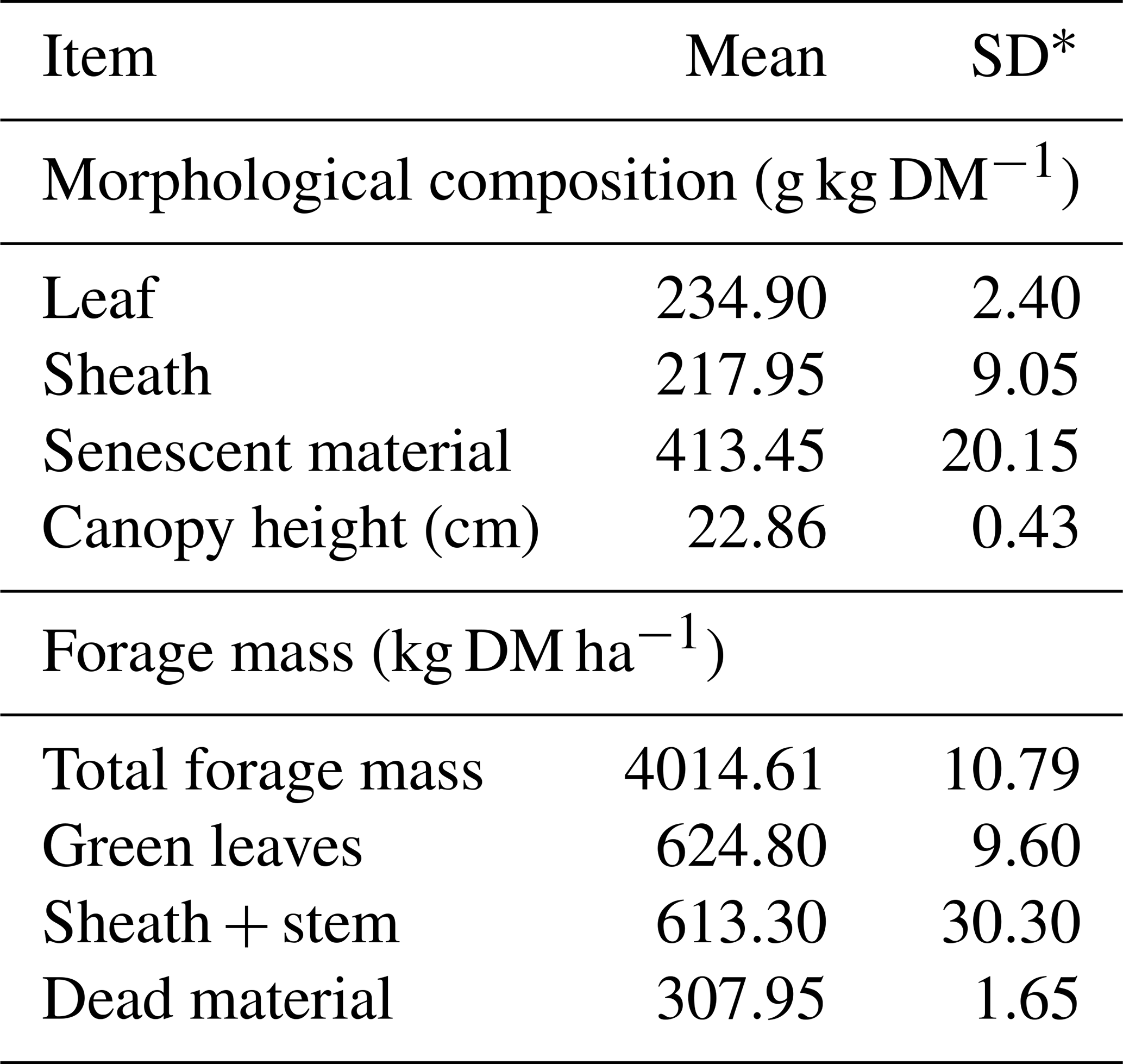
Samples of supplement and pasture ingredients were evaluated for dry matter content (DM; method 930.15; AOAC, 2000), ash (method 942.05; AOAC, 2000), crude protein (CP; method 984.13; AOAC, 2000), ether extract (EE; method 920.39; AOAC, 2000), and neutral detergent fiber (NDF), using alpha-amylase and without the addition of sodium sulfite (Mertens, 2002). The difference between DM and ashes estimated organic matter (OM). Non-fiber carbohydrates (NFC) were calculated according to the Hall (2000) equation, whereas total digestible nutrients (TDN) and net energy were determined according to the NRC (2001). The pasture characteristics evaluated throughout the experimental period – including canopy height, forage mass, and morphological composition (green leaves, sheath + stem, and dead material) – are presented in Table 2.
Table 2Pasture characteristics during the experimental period.
∗ SD: standard deviation
2.5 Urine collection
Urine was obtained during the morning period via spontaneous urination from all animals on days −21, −14, −7; at calving; and on days +7, +14, and +21. Following collection, 2 mL aliquots were filtered and stored in plastic containers at −20 °C. Urinary pH was measured using a digital pH meter (MB-10, Marte Científica, Minas Gerais, Brazil). In addition to determining pH values in urine samples, urea (UR) concentrations were evaluated using the UV time-fixation kinetic method (K056, Bioclin®, Brazil). The absorbances were determined using a spectrophotometer, and the readings were taken at different wavelengths according to the methodologies of the commercial kits.
2.6 Blood metabolites and health parameters
A total of 10 mL of blood was collected via coccygeal vein venipuncture immediately after milking at weeks −3, −2, and −1 prepartum; on the day of calving; and at +1, +2, and +3 weeks postpartum. This was done using Vacutainer® tubes. After collection, the tubes were centrifuged at 1800×g for 15 min. The blood serum was then collected, transferred to Eppendorf® tubes, and stored frozen for later analyses. Serum concentrations of calcium (Ca) were determined using the endpoint colorimetric method (Arsenazo III; K051, Bioclin®, Brazil). Serum concentrations of urea, glucose, and the liver enzyme gamma-glutamyltransferase (GGT) were also determined using colorimetric methods with commercial kits (urea, VET111-2; glucose, VET113-2; GGT, VET118-2; Bioclin®, Belo Horizonte, Minas Gerais, Brazil).
All animals' heart rate, respiratory rate, and rectal temperature were also measured during the prepartum period and calving to the postpartum period (−21, −14, −7; calving; +7, +14, +21 d postpartum).
2.7 Milk production and composition
The animals were mechanically milked twice daily (06:00 and 14:00 LT, UTC−3). Milk yield was automatically recorded using electronic milk meters (MM6®, DeLaval, Sweden). Milk yield was adjusted to 3.5 % fat-corrected milk (FCM) according to Sklan et al. (1992), using the equation FCM (kg d−1) = ( milk fat concentration [%]) × milk yield (kg d−1). Energy-corrected milk (ECM) was calculated according to NASEM (2021) using the following equation: ECM (kg d−1) = 0.327× milk yield (kg d−1) fat yield (kg d−1) protein yield (kg d−1).
Milk samples were collected on days +7, +14, and +21 postpartum. The samples were analyzed for fat, lactose, protein, total solids, and solids-non-fat using the mid-infrared method (LACTOSCAN, Entelbras®, São Paulo, Brazil).
2.8 Weight and body condition score
Body condition score (BCS) and body weight (BW) measurements were performed weekly during the prepartum (−21, −14, −7 d, and day of delivery) and postpartum (+7, +14, and +21 d) periods. BW was assessed by weighing on a scale, and BCS was evaluated according to the method described by Edmonson et al. (1989). BW and BCS were used to calculate changes in body condition score (CBCS) and body weight (CBW).
2.8.1 Statistical analyses
Data were analyzed using a linear mixed model for repeated measures procedure of SAS OnDemand for Academics (SAS Institute Inc., 2026). Thirty-two cows were assigned to two treatments (n=16 per treatment): Control (CON), consisting of the conventional supplement provided to grazing cows during the transition period; and MPS, consisting of the same supplementation strategy with the addition of 1000 mg per cow d−1 of microencapsulated hot chili pepper. Cows were blocked according to the expected calving date and entered the experiment in blocks. Supplementation started 21 d before the expected calving date and continued until 21 d postpartum.
Repeated measurements were obtained from the same cows at 7 d intervals throughout the experimental period. The statistical model included treatment, time relative to calving, and the treatment × time interaction as fixed effects. Block was included in the model, and cow nested within treatment and block was considered a random effect and the experimental unit. Time was treated as the repeated effect, with cow as the subject.
The following statistical model was used:
where Yijkl is the observed response, μ is the overall mean, Bi is the effect of block, Tj is the fixed effect of treatment (CON or MPS), Ck(ij) is the random effect of cow nested within block and treatment, Wl is the fixed effect of week relative to calving (−21, −14, −7, calving, +7, +14, and +21 d), (T×W)jl is the treatment × week interaction, and ϵijkl is the residual error.
A first-order autoregressive covariance structure (AR(1)) was used to model correlations among repeated observations within the same cow over time. This covariance structure assumes that measurements obtained closer in time are more strongly correlated than measurements obtained further apart.
For outcomes directly related to body weight, initial BW was included in the model as a covariate, whereas for BCS-related outcomes, initial BCS was included as a covariate. These covariates were retained in the final model only when significant (P≤0.05). Initial BW and BCS were not used as covariates for milk composition, urinary pH, or other metabolic and physiological outcomes.
Week relative to calving was included as a repeated fixed effect to account for temporal physiological changes during the transition period. When a significant treatment × week interaction was detected, simple effects of treatment were evaluated by comparing Control and MPS cows in each sampling week using model-derived least-squares means. Corresponding P values were reported. Pairwise comparisons among weeks were not performed. Differences were considered statistically significant at P≤0.05, whereas was considered indicative of a statistical tendency. Results are presented as least-squares means and their corresponding standard errors.
Table 3Production and composition of postpartum milk in cows fed microencapsulated pepper.
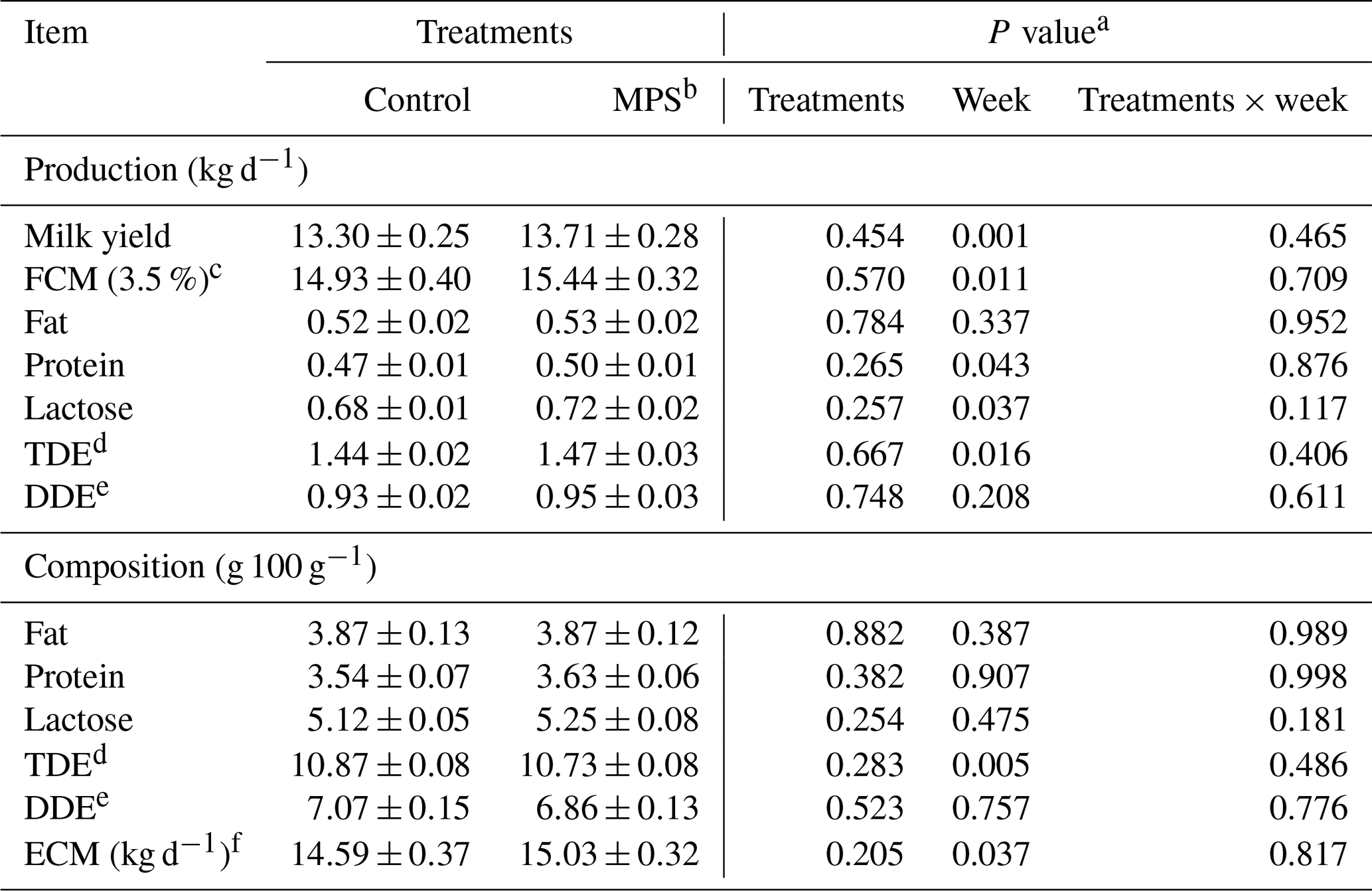
a Probability values for treatments, week, and treatments × week interaction. The significance level was set at 0.05 and the trend between 0.05 and 0.10. b MPS, microencapsulated pepper supplemented. c FCM (3.5 %), milk yield was corrected to 3.5 % fat. d TDE, total dry extract. e DDE, defatted dry extract. f ECM, energy-corrected milk.
No treatment effects or treatment × week interactions were observed for milk production and composition variables (Tables 3 and 4). However, there was a week effect on milk yield (P=0.001; Table 3; Fig. 1A), FCM (3.5 %) (P=0.011; Table 3; Fig. 1B), ECM (P=0.037; Table 3; Fig. 1C), protein yield (P=0.043; Table 3; Fig. 1D), lactose yield (P=0.037; Table 3; Fig. 2A), TDE yield (TDE; kg d−1; P=0.016; Table 3; Fig. 2B), and TDE concentration (g100 g−1; P=0.005; Table 3; Fig. 2C).
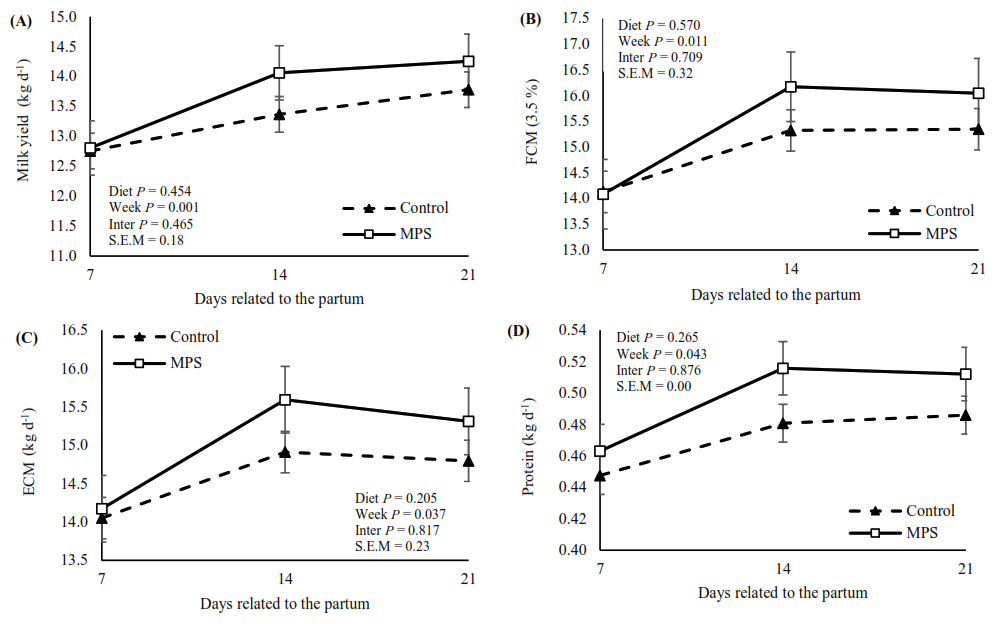
Figure 1Milk production (kg d−1) (A), FCM 3.5 % (kg d−1) (B), ECM (kg d−1) (C), and protein (kg d−1) (D) in the postpartum period in cows fed microencapsulated pepper.
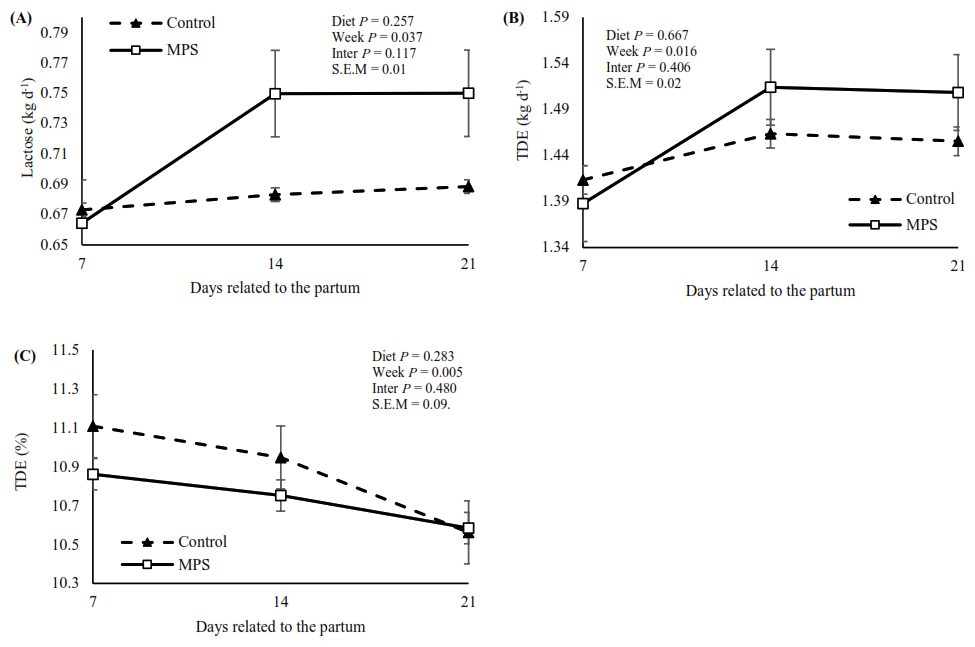
Figure 2Lactose (kg d−1) (A), TDE (kg d−1) (B), and TDE (%) (C) in the postpartum period in cows fed microencapsulated pepper.
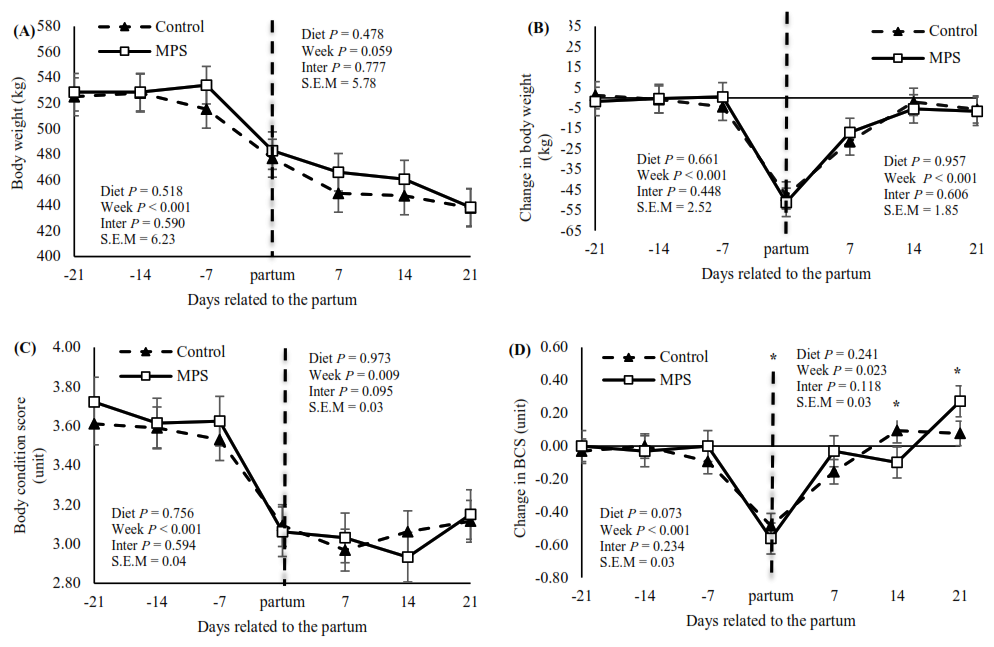
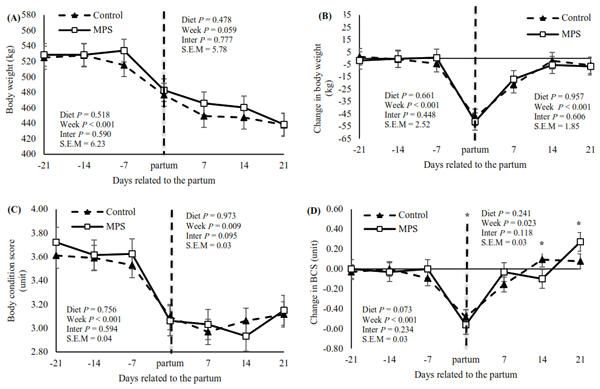
Figure 3Body weight (kg) (A), change body weight (kg) (B), body condition score (unit) (C), and change body condition score (unit) (D) in pre- and postpartum periods in cows fed microencapsulated pepper. (D) (*) Tendencies for differences between treatments in the change in body condition score were observed at calving (P=0.057), 14 d postpartum (P=0.087), and 21 d postpartum (P=0.089).
For BW and BCS, no treatment effects were observed. There was a week effect on BW during the prepartum period (P<0.001) and a tendency for a week effect during the postpartum period (P=0.059; Table 5; Fig. 3A). CBW was affected by week during both the pre- and postpartum periods (both P<0.001; Table 5; Fig. 3B). Similarly, there was a week effect on BCS during the prepartum (P<0.001) and postpartum (P=0.009; Table 5; Fig. 3C) periods, as well as on CBCS during the prepartum (P<0.001) and postpartum (P=0.003; Table 5; Fig. 3D) periods. In addition, there was a tendency for a treatment × week interaction for BCS during the postpartum period (P=0.095).
Table 4Milk production; milk production corrected for 3.5 % fat; milk corrected for energy, protein, lactose, and total dry extract production; and total dry extract of milk in cows fed microencapsulated pepper.

a MPS, microencapsulated pepper supplemented. b probability values comparing treatments (CON vs. MPS) within each postpartum sampling week. c FCM (3.5 %), milk yield was corrected to 3.5 % fat. d ECM, energy-corrected milk. e TDE, total dry extract.
Table 5Body weight, body condition score, and clinical parameters in the pre- and postpartum periods in cows fed microencapsulated pepper.
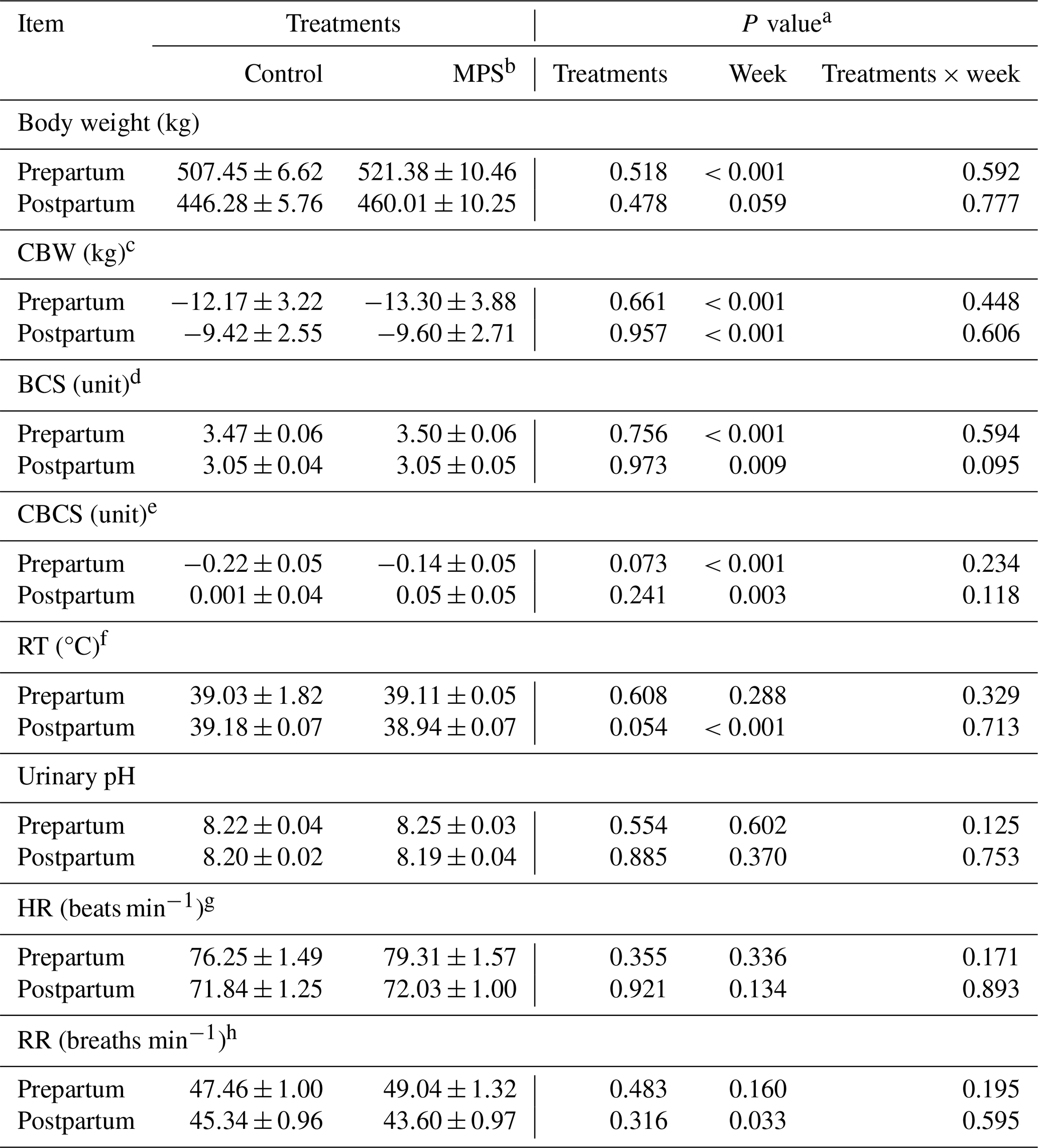
a Probability values for treatments, week, and treatments × week interaction. Significance level was set at 0.05 and the trend between 0.05 and 0.10. b MPS, microencapsulated pepper supplemented. c CBW, change in body weight. d BCS, body condition score. e CBCS, change body condition score. f RT, rectal temperature. g HR, heart rate. h RR, respiratory rate.
BW and BCS decreased markedly around parturition, with average losses of approximately 44.78 kg of BW and 0.50 BCS units between day −7 and parturition. After parturition, BW continued to decrease, whereas BCS showed a slight reduction until day 7, followed by a gradual recovery through day 21.
When treatments were compared in each week, tendencies for differences in CBCS were observed at parturition, and at 14 and 21 d postpartum (Table 6; Fig. 3D). At parturition, CON cows showed a smaller loss of BCS than MPS-supplemented cows (−0.48 vs. −0.56 units; P=0.057). At 14 d postpartum, CON cows showed a positive change in BCS, whereas MPS-supplemented cows showed a negative change (0.09 vs. −0.10 units; P=0.087). However, at 21 d postpartum, this pattern was reversed, with MPS-supplemented cows showing greater BCS recovery than CON cows (0.27 vs. 0.08 units; P=0.089).
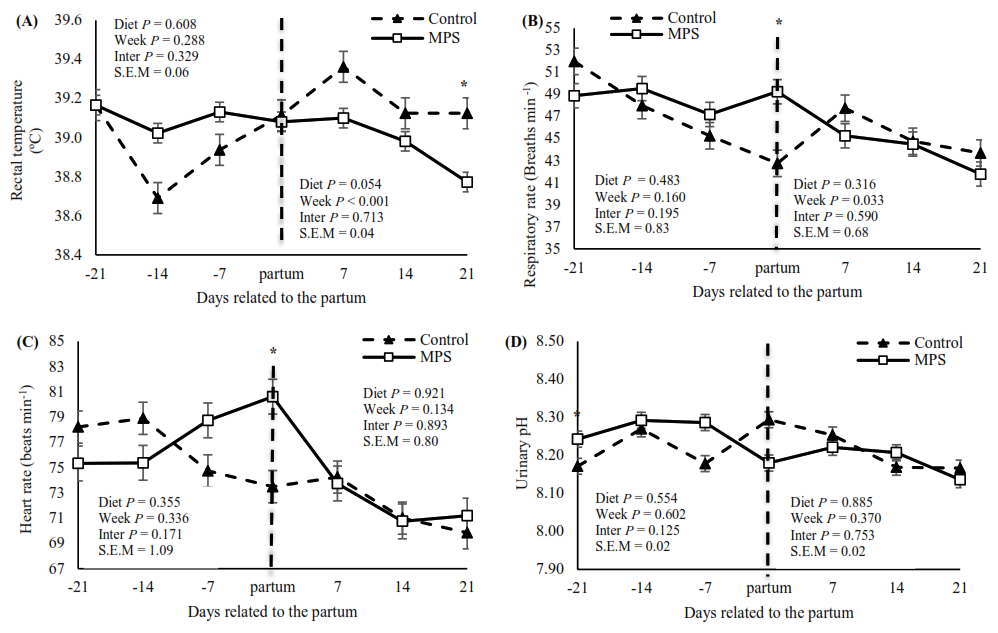
Figure 4Temperature (°C) (A), respiratory rate (breaths min−1) (B), heart rate (beats min−1) (C), and urinary pH (D) in the pre- and postpartum periods in cows fed microencapsulated pepper. (A) * A tendency for differences between means was observed for rectal temperature at +21 d postpartum (P=0.078). (B) * A significant difference between means was observed for respiratory rate at parturition (P=0.037). (C) * A tendency for differences between means was observed for heart rate at parturition (P=0.076).
Among the physiological parameters, there was a week effect on rectal temperature (RT) during the postpartum period (P<0.001; Table 5; Fig. 4A), as well as a tendency for a treatment effect during this period (P=0.054), with lower mean RT values in MPS-supplemented cows. At 21 d postpartum, MPS-supplemented cows tended to have lower RT than CON cows (38.77 vs. 39.13 °C; P=0.078; Table 6; Fig. 4A).
Table 6Body weight, body weight change, body condition score, change in body condition score, rectal temperature, respiratory rate, heart rate, and urinary pH in cows fed microencapsulated pepper.
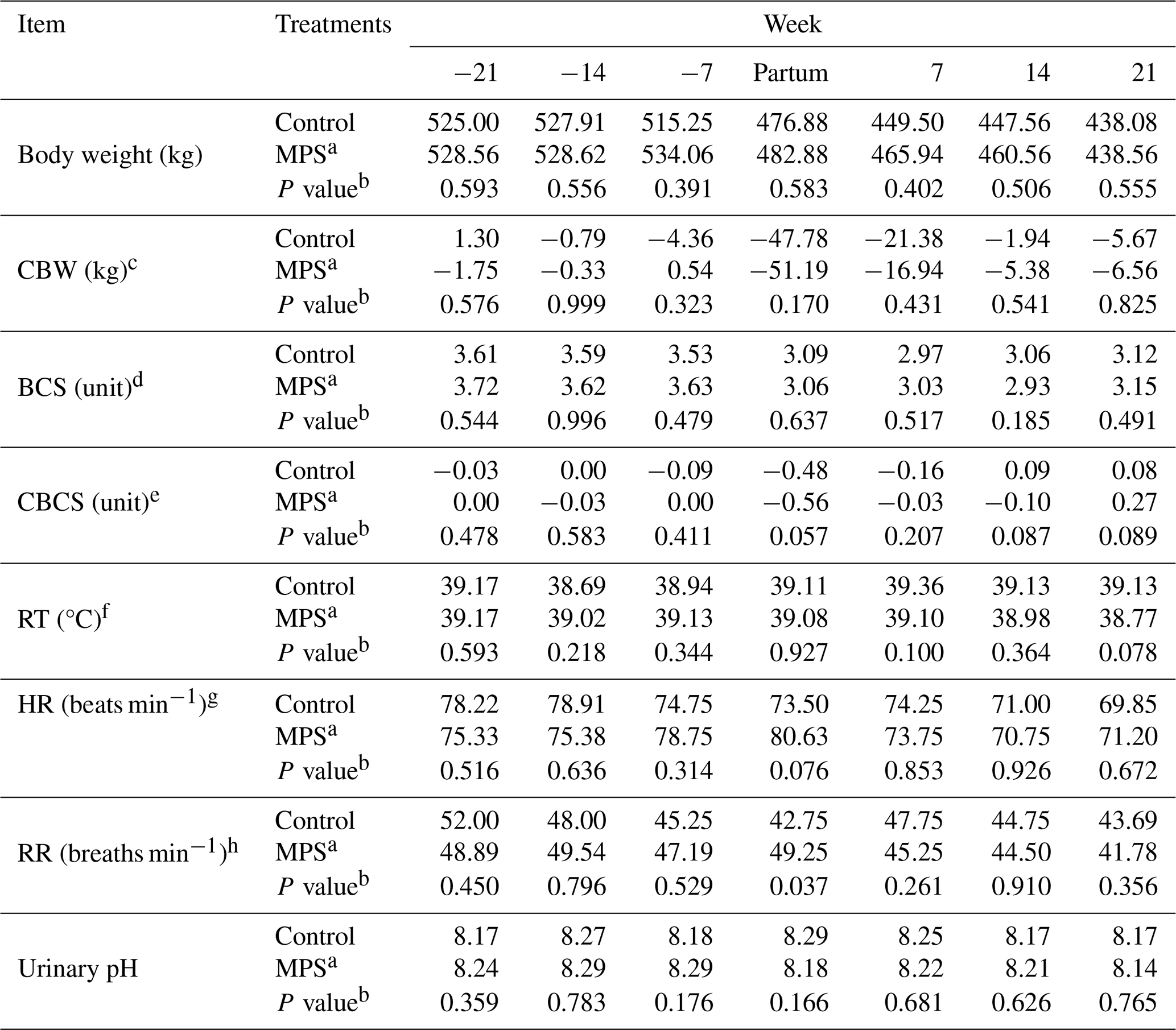
a MPS, microencapsulated pepper supplemented. b Probability values for diet, week, and diet × week interaction. Significance level was set at 0.05 and the trend between 0.05 and 0.10. c CBW, change in body weight. d BCS, body condition score. e CBCS, change body condition score. f RT, rectal temperature. g HR, heart rate. h RR, respiratory rate.
Respiratory rate (RR) was also affected by week during the postpartum period (P=0.033; Table 5; Fig. 4B). At parturition, CON cows had lower RR than MPS-supplemented cows (42.75 vs. 49.25 movements min−1; P=0.037; Table 6; Fig. 4B). For heart rate (HR), no overall effects of treatment, week, or treatment × week interaction was observed during the pre- or postpartum periods. However, at parturition, MPS-supplemented cows tended to have higher HR than CON cows (80.63 vs. 73.50 beats min−1; P=0.076; Table 6; Fig. 4C). Urinary pH was not affected by treatment, week, or treatment × week interaction during either the pre- or postpartum period (P>0.05; Tables 5 and 6; Fig. 4D).
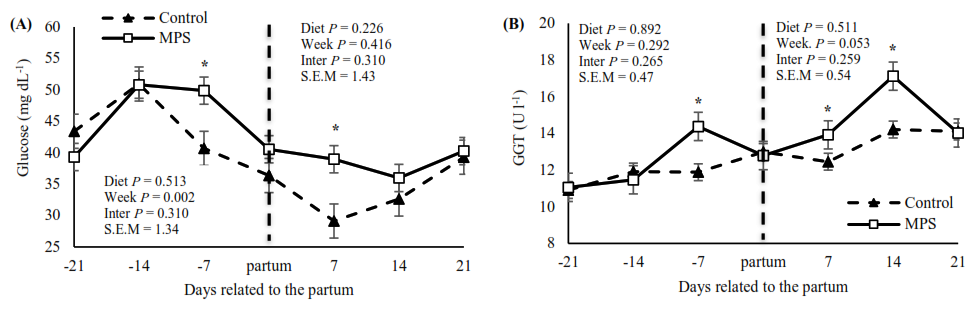
Figure 5Glucose (mg dL−1) (A) and gamma-glutamyltransferase (U L−1) (B) in the pre- and postpartum periods in cows supplemented with microencapsulated pepper. (A) * Significant values between the means for glucose (mg dL−1) at −7 and +7 d relative to parturition (P<0.05). (B) * Significant values between the means for GGT (U L−1) at −7, +7, and +14 d relative to parturition (P<0.05).
Table 7Blood metabolites in the pre- and postpartum periods in cows fed microencapsulated pepper.

a Probability values for treatments, week, and treatments × week interaction. The significance level was set at 0.05 and the trend between 0.05 and 0.10. b MPS, microencapsulated pepper supplemented. c GGT, gamma-glutamyltransferase.
No treatment × week interaction was observed for the concentrations of the blood metabolites evaluated (P>0.05; Table 7). During the prepartum period, there was a week effect on glucose concentration (P=0.002; Fig. 5A), whereas during the postpartum period, there was a tendency for a week effect on GGT concentration (P=0.053; Fig. 5B). No effects of treatment, week, or treatment × week interaction were observed for serum urea, calcium concentrations or urinary urea (P>0.05).
When treatments were compared at specific weeks, MPS-supplemented cows had higher glucose concentrations at days −7 and +7 relative to parturition than CON cows (P<0.05). In addition, higher GGT concentrations were observed in MPS-supplemented cows at days −7, +7, and +14 relative to parturition (P<0.05; Fig. 5).
The effect of week on milk yield, FCM (3.5 %), and ECM reflects the normal physiological adaptations that occur during early lactation. As lactation progresses, endocrine and metabolic adjustments promote nutrient partitioning toward the mammary gland to support milk synthesis. Hormones such as prolactin, bovine somatotropin, insulin, and thyroid hormones are known to regulate mammary gland function and energy metabolism during this period (Fazio et al., 2022; Alnimer et al., 2025; Collier et al., 2025). In particular, somatotropin plays an important homeorhetic role during early lactation by coordinating changes in carbohydrate, lipid, and protein metabolism, and promoting nutrient partitioning toward the mammary gland (Collier et al., 2025).
During this period, glucose plays a central role as the primary precursor for lactose synthesis in the mammary gland. Lactose, in turn, has an important osmotic role in milk secretion, contributing to the regulation of milk volume. In ruminants, the high glucose demand is met predominantly by hepatic gluconeogenesis, with propionate being one of its main precursors. Thus, the changes observed over the weeks in milk yield and milk components likely reflect the progressive adaptation of maternal metabolism and mammary secretory activity during the establishment of lactation. Because there was no treatment effect or treatment × week interaction on these variables, these responses appear to be primarily related to the progression of lactation rather than to a direct effect of MPS.
Although productive responses to capsaicin have been reported in dairy cows, the available results are not entirely consistent. In a meta-analysis of studies involving dairy cows, Orzuna-Orzuna et al. (2024) observed positive responses in some productive traits and an increase in total VFA concentration. Meanwhile, in a meta-analysis of 11 studies published between 2011 and 2024, Wasson et al. (2024) also identified modest effects on milk yield. This variability among studies may help to explain the lack of a productive response to MPS under the conditions evaluated in the present experiment.
There was a reduction in body weight and a loss of BCS in the weeks preceding calving. This effect is expected and is mainly associated with reduced intake, decreased ruminal space due to compression exerted by the gravid uterus, increased estradiol concentrations, decreased progesterone concentrations, and increased energy demands resulting from fetal growth and preparation for lactogenesis (Casaro et al., 2024) – factors that affect nutrient availability for maintaining body reserves. In parallel, the greater nutritional requirements for fetal development and colostrum synthesis favor an imbalance between nutrient supply and demand, resulting in the mobilization of adipose and muscle reserves to support the metabolic demands of late gestation and early lactation (Kang et al., 2025). This set of adaptations is consistent with the reduction in body weight and BCS observed around calving.
The weekly variation observed in BW after calving was characterized by a significant reduction, mainly attributed to the expulsion of the fetus, placenta, and fetal fluids, as well as the involution of uterine tissues that previously supported pregnancy (Carbonari et al., 2024). This period is also characterized by NEB, in which the metabolic demand for lactation exceeds the availability of nutrients required to fully meet production demands. Consequently, the cow mobilizes body reserves, mainly fat and muscle protein, contributing to a further reduction in body weight (Kang et al., 2025).
However, it should be noted that the magnitude of weight loss and the negative change in BCS decreased over the postpartum weeks, suggesting a progressive reduction in the mobilization of body reserves as cows advanced through early lactation. This pattern is consistent with the metabolic adaptation characteristic of this period and with the progressive reorganization of nutrient partitioning among maintenance, milk production, and body reserves.
There was a tendency for an interaction between MPS supplementation and postpartum weeks for BCS, suggesting a possible influence of MPS on the temporal dynamics of body reserve mobilization and recovery. However, this response was not consistent throughout the entire evaluation period. During the initial stages, cows supplemented with MPS showed greater mobilization, whereas at the end of the period they showed greater BCS recovery. Consequently, the results do not allow the conclusion that MPS attenuated NEB but did indicate a possible modification in the dynamics of body reserves during early lactation. This is consistent with the pattern observed for CBCS, in which the direction of the response between CON and MPS varied at calving, and at +14 and +21 d. Oh et al. (2021) also demonstrated that supplementation with rumen-protected Capsicum species during the transition period may modify metabolic indicators, although the mechanisms underlying these responses are not yet fully understood.
Variations in body temperature around calving should be interpreted within the context of the physiological changes that are characteristic of the peripartum period. During this period, the cow's metabolism intensifies to support the demands associated with late gestation, calving, and the establishment of lactation, which may temporarily modify heat production and dissipation.
In addition, on the day of calving, RR was greater and HR tended to be greater in cows supplemented with MPS. These physiological effects may be associated, among other mechanisms, with the action of capsaicinoids on TRPV1 channels, which can trigger autonomic responses and participate in the regulation of cardiovascular and respiratory responses to peripheral stimuli (Shanks et al., 2018). However, because these differences were transient and restricted to the time of calving, the involvement of TRPV1 should be considered a mechanistic hypothesis rather than a response demonstrated in the present study.
An effect of postpartum week on body temperature and respiratory rate was observed, with a gradual reduction in these parameters over the period. This decrease reflects the progressive physiological adaptation of cows after calving and the establishment of lactation. During gestation, fetal growth exerts compression on the diaphragm, potentially modifying maternal respiratory mechanics (Barros et al., 2024). After calving, the removal of this compression may facilitate pulmonary ventilation and contribute to the normalization of respiratory rate. In parallel, postpartum physiological and metabolic adjustments may contribute to the stabilization of body temperature.
In addition, the tendency toward lower RT in MPS-supplemented cows at 21 d postpartum may indicate a possible influence of the supplement on thermoregulation. Capsaicin is an agonist of TRPV1 receptors, which are involved in the detection of thermal stimuli and responses related to body temperature regulation. However, considering that this response was observed only at 21 d and was characterized as a tendency, a consistent thermoregulatory effect cannot be attributed to MPS. Furthermore, because direct measures of heat dissipation or TRPV1 activation were not evaluated, the mechanism underlying this response remains uncertain.
There was a reduction in plasma glucose concentrations in the weeks preceding calving, which may be attributed to metabolic and hormonal adaptations that prioritize glucose partitioning toward tissues with greater demands during the transition period (Guo et al., 2025).
As mentioned previously, during this period the cow undergoes an intense reorganization of energy metabolism, favoring the mobilization of body reserves. In parallel, during the prepartum period, the sensitivity of peripheral tissues to insulin decreases. This resistance represents a physiological adaptation aimed at prioritizing the available glucose for the developing fetus and, after the onset of lactation, for the mammary gland (Qiao et al., 2024). As a result, these metabolic adaptations may contribute to the reduction in plasma glucose concentrations during the final weeks of gestation.
It was also observed that MPS supplementation at −7 and +7 d relative to calving increased serum glucose concentrations. This result suggests a possible influence of MPS on glucose metabolism; however, the mechanism underlying this response cannot be determined in the present study. In a meta-analysis, Orzuna-Orzuna et al. (2024) observed increased serum glucose concentration and total VFA concentration in cows supplemented with capsaicin. However, this does not allow the conclusion that the increase in glucose observed in the present study resulted specifically from greater propionate production, because ruminal fermentation and VFA were not evaluated.
Furthermore, the results available in the literature are not consistent. Although Orzuna-Orzuna et al. (2024) reported increased serum glucose, Wasson et al. (2024) observed a different glycemic response in their meta-analysis, indicating that the effects of capsaicin on glucose metabolism may vary according to experimental conditions. Therefore, the greater glucose concentrations observed at −7 and +7 d should be interpreted as time-specific metabolic responses associated with MPS, without necessarily inferring an overall improvement in energy metabolism or increased gluconeogenesis.
A tendency toward increased serum GGT concentrations, an enzyme associated with the hepatobiliary system, was observed over the postpartum weeks. The liver plays a central role in metabolic adaptation to early lactation, particularly through its involvement in gluconeogenesis and in the metabolism of substrates mobilized from body reserves. During this period, the mobilization of adipose tissue may increase the flux of non-esterified fatty acids (NEFA) to the liver, where these fatty acids may be oxidized or converted into triglycerides. However, the hepatic capacity to export triglycerides in the form of VLDL is limited in cattle, making the liver particularly susceptible to the metabolic changes characteristic of early lactation (Ahmad et al., 2024).
In addition to the high metabolic demand, the transition period is also associated with increased oxidative stress, characterized by the accumulation of reactive oxygen species. Oxidative stress may contribute to cellular and inflammatory changes, including those in hepatic tissue, representing another component of the metabolic adaptations that occur during the transition period (Campos-Gaona et al., 2024).
GGT concentrations were also increased at −7, +7, and +14 d in cows supplemented with MPS. However, these time-specific differences do not allow us to conclude that MPS stimulated hepatic activity or increased gluconeogenesis. GGT should be interpreted together with other metabolic and clinical indicators, particularly because there was no overall treatment effect or treatment × week interaction for this variable.
However, it should be noted that, despite this increase, GGT concentrations remained within the range considered normal for cows in early lactation (10 to 37 U L−1) (Calamari et al., 2015). Therefore, the observed variations appear to be more consistent with the metabolic adaptations characteristic of the transition period than with evidence of impaired hepatobiliary function.
Microencapsulated hot chili pepper supplementation during the transition period did not affect overall milk production, body weight, or body condition score in grazing Holstein × Gyr cows. However, time-specific differences were observed in some physiological and metabolic parameters, including rectal temperature, respiratory rate, blood glucose, and GGT concentrations. These findings suggest that MPS may modulate specific physiological and metabolic responses during the transition period, although they do not provide sufficient evidence to infer improvements in energy balance, hepatic function, or thermoregulation. Further studies incorporating direct measurements of these processes are needed to determine the biological relevance of these responses and to clarify the mechanisms of action of MPS in transition dairy cows.
The data that support this study will be shared upon reasonable request to the corresponding author.
E.C.: writing (original draft, review, and editing) and research. N.D.: writing (review and editing). A.M.: writing (review and editing). E.P.N.: research. A.P.: writing (review and editing). L.B.: writing (review and editing) and formal analysis. G.C.: conceptualization and writing (review and editing). D.P.: writing (review and editing) and formal analysis. J.F.J.: conceptualization, writing (review and editing), and fundraising.
The contact author has declared that none of the authors has any competing interests.
All experimental procedures used in this study were reviewed and approved by the Ethics Committee of Animal Use from the School of Veterinary Medicine and Animal Science of the Federal University of Bahia (UFBA), Salvador, Brazil (permit no. 02-2024).
Publisher's note: Copernicus Publications remains neutral with regard to jurisdictional claims made in the text, published maps, institutional affiliations, or any other geographical representation in this paper. The authors bear the ultimate responsibility for providing appropriate place names. Views expressed in the text are those of the authors and do not necessarily reflect the views of the publisher.
The first author acknowledges the Coordination for the Improvement of Higher Education Personnel (CAPES, Brazil) for the scholarship received.
This paper was edited by Franziska Koch and reviewed by two anonymous referees.
Ahmad, G., Daddam, J. R., Trevisi, E., Mezzetti, M., Lovotti, G., Puda, E., Gallagher, K., Bernstein, I., Vandehaar, M., and Zhou, Z.: Effects of abomasal infusion of branched-chain amino acids or branched-chain keto-acids on liver function, inflammation, and oxidative stress in multiparous fresh cows, J. Dairy Sci., 107, 9309–9321, https://doi.org/10.3168/jds.2024-24914, 2024.
Alnimer, M. A., Abedal-Majed, M. A., Al-Qaisi, M., and Shamoun, A. I.: Effect of circulating prolactin, lactation days, and seasonal variations on first artificial insemination pregnancy rates using the PG7G protocol in dairy cows, Vet. World, 18, 40–51, https://doi.org/10.14202/vetworld.2025.40-51, 2025.
AOAC (Association of Official Analytical Chemists) (Eds.): Official Methods of Analysis of AOAC International AOAC, Association of Official Analytical Chemists, Arlington, VA, ISBN 978-0-935584-67-7, 2000.
Barbero, R. P., Malheiros, E. B., Araújo, T. L. R., Nave, R. L. G., Mulliniks, J. T., Berchielli, T. T., Ruggieri, A. C., and Reis, R. A.: Combining Marandu grass grazing height and supplementation level to optimize growth and productivity of yearling bulls, Anim. Feed Sci. Technol., 209, 110–118, https://doi.org/10.1016/j.anifeedsci.2015.09.010, 2015.
Barros, T. B., Socodato, I. G., and Toniolli, R.: Enfermidades do útero gestante, Ciênc. Anim., 34, 93–114, 2024.
Calamari, L., Gobbi, L., Russo, F., and Cappelli, F. P.: Pattern of γ-glutamyl transferase activity in cow milk throughout lactation and relationships with metabolic conditions and milk composition, J. Anim. Sci., 93, 3891–3900, https://doi.org/10.2527/jas.2015-9022, 2015.
Campos-Gaona, R., Correa-Orozco, A., Salamanca-Carreño, A., and Vélez-Terranova, M.: Index development to comprehensively assess liver function during the dairy cows' transition period in low-tropic conditions, Animals, 14, 2056, https://doi.org/10.3390/ani14142056, 2024.
Carbonari, A., Burgio, M., Frattina, L., Ceci, E., Sciannamblo, M., Ricci, P., Cicirelli, V., and Rizzo, A.: Oxytocin, prostaglandin F2α, and scopolamine for uterine involution of dairy cows, Front. Vet. Sci., 11, 1405746, https://doi.org/10.3389/fvets.2024.1405746, 2024.
Casaro, S., Pérez-Báez, J., Bisinotto, R. S., Chebel, R. C., Prim, J. G., Gonzalez, T. D., Gomes, G. C., Tao, S., Toledo, I. M., Amaral, B. C., Bollati, J. M., Zenobi, M. G., Martinez, N., Dahl, G. E., Santos, J. E. P., and Galvão, K. N.: Association between prepartum body condition score and prepartum and postpartum dry matter intake and energy balance in multiparous Holstein cows, J. Dairy Sci., 107, 4381–4393, https://doi.org/10.3168/jds.2023-24047, 2024.
Collier, R. J., Bauman, D. E., and Baumgard, L. H.: Invited review: Somatotropin and lactation biology, J. Dairy Sci., 108, 6538–6549, https://doi.org/10.3168/jds.2024-26177, 2025.
Drackley, J. K.: Biology of dairy cows during the transition period: the final frontier?, J. Dairy Sci., 82, 2259–2273, https://doi.org/10.3168/jds.S0022-0302(99)75474-3, 1999.
Edmonson, A. J., Lean, I. J., Weaver, L. D., Farver, T., and Webster, G.: A body condition scoring chart for Holstein dairy cows, J. Dairy Sci., 72, 68–78, https://doi.org/10.3168/jds.S0022-0302(89)79081-0, 1989.
Fazio, E., Bionda, A., Chiofalo, V., Crepaldi, P., Lopreiato, V., Medica, P., and Liotta, L.: Adaptive responses of thyroid hormones, insulin, and glucose during pregnancy and lactation in dairy cows, Animals, 12, 1395, https://doi.org/10.3390/ani12111395, 2022.
Grigoletto, N. T. S., Takiya, C. S., Bugoni, M., Nunes, A. T., Vittorazzi Junior, P. C., Chesini, R. G., Silva, G. G., Santos, F. M., and Rennó, F. P.: Influence of encapsulated pepper on ruminal fermentation, nutrient digestibility, and performance in dairy cows, Livest. Sci., 267, 105140, https://doi.org/10.1016/j.livsci.2022.105140, 2023.
Guo, Y., Zhao, Y., Wei, Z., and Cao, J.: Effects of exogenous insulin supplementation on lipid metabolism in peripartum obese dairy cows, Front. Vet. Sci., 11, 1468779, https://doi.org/10.3389/fvets.2024.1468779, 2025.
Hall, M. B.: Calculation of non-structural carbohydrate content of feeds that contain non–protein nitrogen, University of Florida, Gainesville, FL, 2000.
Horan, L., Patton, J., McAloon, C. G., García-Muñoz, Á., Regan, Á., Mee, J. F., and Valldecabres, A.: Transition cow health and management in pasture-based dairy herds: a farmers' survey, PLoS One, 19, e0314987, https://doi.org/10.1371/journal.pone.0314987, 2024.
Kang, D., Lungu, S. E., Danso, F., Dzou, C. F., Chen, Y., Zheng, X., Nie, F., Lin, H., Chen, J., and Zhou, G.: Animal health and nutrition: metabolic disorders in cattle and improvement strategies, Front. Vet. Sci., 12, 1470391, https://doi.org/10.3389/fvets.2025.1470391, 2025.
Li, H., Wu, Z., Yu, B., Chen, J., Yang, C., Guo, Y., and Sun, B.: Dietary capsaicin supplementation mitigates calving-induced stress and enhances antioxidant capacity, immune function, and gut microbiota in periparturient dairy cows, Antioxidants, 14, 28, https://doi.org/10.3390/antiox14010028, 2024.
Lopes, I. M., Pereira, J. R., Teixeira, L. G., Silva, F. F., Carvalho, G. G. P., Rodrigues, C. S., Santiago, M. R., Araújo, M. L. G. M., Pires, A. J. V., Silva, R. D. G., Pina, D. S., Rennó, F. P., Brant, L. M. S., and Freitas Júnior, J. E.: Capsaicin supplementation on ruminal fermentation, immune responses, intake and digestibility nutrients in grazing bulls, J. Agric. Sci., 163, 118–127, https://doi.org/10.1017/S0021859624000716, 2025.
Madrigal-Valverde, M., Loiola, M. V. G., Freitas Júnior, J. E., Santiago, M. R., Dantas, L. L., Menezes, A. A., Carneiro, I. M. B., Xavier, G. M., Araújo, E. A. B., Pereira, J. R., and Bittencourt, R. F.: Improving milk yield, milk quality, and follicular functionality behavior in dairy cows from the implementation of microencapsulated chili pepper supplements in their diets, Animals, 14, 2361, https://doi.org/10.3390/ani14162361, 2024.
Madrigal-Valverde, M., Loiola, M. V. G., Freitas Junior, J. E., Santiago, M. R., Dantas, L. L., Menezes, A. A., Percário, S., Varela, E. L. P., Costa, E., Araújo, E. A. B., and Bittencourt, R. F.: The effects of microencapsulated hot chili pepper on the blood metabolites and physiological parameters of dairy cows, Vet. World, 18, 907–917, https://doi.org/10.14202/vetworld.2025.907-917, 2025.
Mekuriaw, Y.: Negative energy balance and its implication on productive and reproductive performance of early lactating dairy cows, J. Appl. Anim. Res., 51, 220–228, https://doi.org/10.1080/09712119.2023.2176859, 2023.
Mertens, D. R.: Gravimetric determination of amylase-treated neutral detergent fiber in feeds with refluxing in beaker or crucibles: collaborative study, J. AOAC Int., 85, 1217–1240, https://doi.org/10.1093/jaoac/85.6.1217, 2002.
Miranda, A. P. G. F., de Carvalho, G. G. P., Pina, D.S., Santos, L. S., Brant, L. M. S., Leal, P. V., Pires, A. J. V., Mendes, R.B., Pereira Neto, E., Xavier, M. M. O., Takiya, C. S. and de Freitas Júnior, J. E.: Use of microencapsulated pepper with different levels of energy supplementation in grazing beef cattle, Anim. Feed Sci. Technol., 330, 116564, https://doi.org/10.1016/j.anifeedsci.2025.116564, 2025.
National Academies of Sciences, Engineering, and Medicine (NASEM): Nutrient requirements of dairy cattle, 8th rev. edn., The National Academies Press, https://doi.org/10.17226/25806, 2021.
National Research Council (NRC): Nutrient requirements of dairy cattle, 7th edn., DC, The National Academies Press, https://doi.org/10.17226/9825, 2001.
Oh, J., Hristov, A. N., Lee, C., Cassidy, T., Heyler, K., Varga, G. A., Pate, J., Walusimbi, S., Brzezicka, E., Toyokawa, K., Werner, J., Donkin, S. S., Elias, R., Dowd, S., and Bravo, D.: Immune and production responses of dairy cows to postruminal supplementation with phytonutrients, J. Dairy Sci., 96, 7830–7843, https://doi.org/10.3168/jds.2013-7089, 2013.
Oh, J., Giallongo, F., Frederick, T., Pate, J., Walusimbi, S., Elias, R. J., Wall, E. H., Bravo, D., and Hristov, A. N.: Effects of dietary Capsicum oleoresin on productivity and immune responses in lactating dairy cows, J. Dairy Sci., 98, 6327–6339, https://doi.org/10.3168/jds.2014-9294, 2015.
Oh, J., Harper, M., Giallongo, F., Bravo, D. M., Wall, E. H., and Hristov, A. N.: Effects of rumen-protected Capsicum oleoresin on productivity and responses to a glucose tolerance test in lactating dairy cows, J. Dairy Sci., 100, 1888–1901, https://doi.org/10.3168/jds.2016-11665, 2017.
Oh, J., Harper, M. T., Melgar, A., Räisänen, S., Chen, X., Nedelkov, K., Fetter, M., Ott, T., Wall, E.H. and Hristov, A. N.: Dietary supplementation with rumen-protected capsicum during the transition period improves the metabolic status of dairy cows, J. Dairy Sci., 104, 11609–11620, https://doi.org/10.3168/jds.2020-19892, 2021.
Orzuna-Orzuna, J. F., Godina-Rodríguez, J. E., Garay-Martínez, J. R., and Lara-Bueno, A.: Capsaicin as a dietary additive for dairy cows: a meta-analysis on performance, milk composition, digestibility, rumen fermentation, and serum metabolites, Animals, 14, 1075, https://doi.org/10.3390/ani14071075, 2024.
Qiao, K., Jiang, R., Contreras, G. A., Xie, L., Pascottini, O. B., Opsomer, G., and Dong, Q.: The complex interplay of insulin resistance and metabolic inflammation in transition dairy cows, Animals, 14, 832, https://doi.org/10.3390/ani14060832, 2024.
Rossa, F., Santos, A. P. S., Teixeira, F. A., Santos, C. J., Silva, R. R., de Freitas Júnior, J. E., Brant, L. M. S., and Silva, F. F.: Effect of increasing prickly pear cactus (Nopalea cochenillifera) levels in diets of Holstein × Zebu dairy cows on nutrients intake and digestibility, ingestive behavior, and milk fatty acids profile, Trop. Anim. Health Prod., 58, 197, https://doi.org/10.1007/s11250-025-04812-x, 2026.
Santiago, M. R., Madrigal-Valverde, M., Silva, A. P. G. D., Araújo, M. L. G. M. L. D., Carvalho, G. G. P. D., Pina, D. D. S., Pires, A. J. V., Menezes, A. A., Dantas, L. L., Chaves, M. L. O., Brant, L. M. S., and Freitas Júnior, J. E. D.: Effects of capsaicin and monensin on ruminal fermentation, intake, nutrient digestibility, and ruminal dynamics of grazing bulls, Arch. Anim. Breed., 69, 275–287, https://doi.org/10.5194/aab-69-275-2026, 2026.
SAS Institute Inc.: SAS OnDemand for Academics, Cary, NC, SAS Institute Inc., https://welcome.oda.sas.com/, last access: 2 January 2026.
Shanks, J., Xia, Z., Lisco, S. J., Rozanski, G. J., Schultz, H. D., Zucker, I. H., and Wang, H. J.: Sympatho-excitatory response to pulmonary chemosensitive spinal afferent activation in anesthetized, vagotomized rats, Physiol. Rep., 6, e13742, https://doi.org/10.14814/phy2.13742, 2018.
Silva, R., Loiola, M. V. G., Filho, A. R., Cotrim, D. C., Rekowsky, B. S. S., Lopes, I. M. S., Bulcão, L. F. A., Araújo, M. L. G. M., Pina, D. S., Carvalho, G. G. P., and Freitas Júnior, J. E.: Effect of the racial group and body condition score at calving on production performance and metabolic profile of buffaloes during the transition period, Trop. Anim. Health Prod., 55, 261, https://doi.org/10.1007/s11250-023-03667-4, 2023.
Silvestre, T., Räisänen, S. E., Cueva, S. F., Wasson, D. E., Lage, C. F. A., Martins, L. F., Wall, E., and Hristov, A. N.: Effects of a combination of Capsicum oleoresin and clove essential oil on metabolic status, lactational performance, and enteric methane emissions in dairy cows, J. Dairy Sci., 105, 9610–9622, https://doi.org/10.3168/jds.2022-22203, 2022.
Sklan, D., Ashkenazi, R., Braun, A., Devorin, A., and Tabori, K.: Fatty acids, calcium soaps of fatty acids, and cottonseeds fed to high yielding cows, J. Dairy Sci., 75, 2463–2472, https://doi.org/10.3168/jds.S0022-0302(92)78008-4, 1992.
Wasson, D. E., Martins, L. F., Wall, E. H., and Hristov, A. N.: Lactational performance and hematological effects of capsaicin supplementation in dairy cows: a meta-analysis, J. Dairy Sci., 107, 8009–8020, https://doi.org/10.3168/jds.2024-24956, 2024.