Original study
|

05 May 2026
Original study |
|
05 May 2026
Effects of capsaicin and monensin on ruminal fermentation, intake, nutrient digestibility, and ruminal dynamics of grazing bulls
Murilo R. Santiago, Mónica Madrigal-Valverde, Ana Paula G. da Silva, Maria Leonor G. M. L. de Araújo, Gleidson Giordano P. de Carvalho, Douglas dos Santos Pina, Aureliano José V. Pires, Artur A. Menezes, Lara L. Dantas, Maria Luiza O. Chaves, Lara Maria S. Brant, and José Esler de Freitas Júnior
Related authors
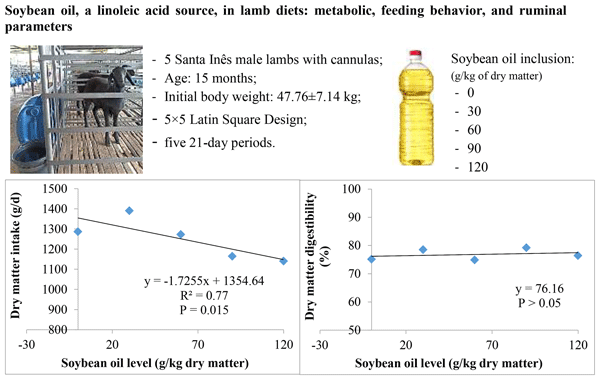
Soybean oil, a linoleic acid source, in lamb diets: metabolic, feeding behavior, and ruminal parameters
Victor Guimarães Oliveira Lima, Liliane Oliveira da Silva, José Esler de Freitas Jr., Henry Daniel Ruiz Alba, Vagner Maximino Leite, Willian Pereira Silva, Douglas dos Santos Pina, Laudí Cunha Leite, Carlindo Santos Rodrigues, Stefanie Alvarenga Santos, and Gleidson Giordano Pinto de Carvalho
Arch. Anim. Breed., 68, 77–87, https://doi.org/10.5194/aab-68-77-2025,https://doi.org/10.5194/aab-68-77-2025, 2025
Short summary

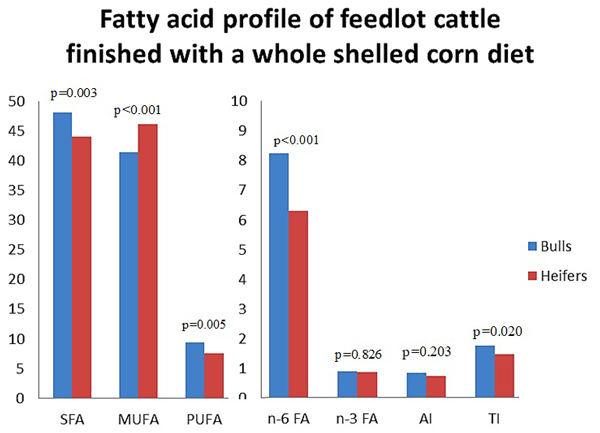
Sex effect on the fatty acid profile and chemical composition of meat from beef cattle fed a whole shelled corn diet
Elizângela O. C. Santana, Robério R. Silva, Julliana I. Simionato, Geraldo Trindade Júnior, Túlio O. J. D'A. Lins, Gabriel D. da Costa, Bruna M. A. de C. Mesquita, Henry D. R. Alba, and Gleidson G. P. de Carvalho
Arch. Anim. Breed., 66, 51–60, https://doi.org/10.5194/aab-66-51-2023,https://doi.org/10.5194/aab-66-51-2023, 2023
Short summary
Carcass and meat traits of goats fed diets containing cottonseed cake
Dallyson Yehudi Coura de Assis, Fabiano Almeida de Oliveira, Edson Mauro Santos, Ana Alice Lima de Gouvêa, Bruna Maria Aparecida de Carvalho, Camila de Oliveira Nascimento, Luís Gabriel Alves Cirne, Douglas dos Santos Pina, Aureliano José Vieira Pires, Henry Daniel Ruiz Alba, and Gleidson Giordano Pinto de Carvalho
Arch. Anim. Breed., 64, 395–403, https://doi.org/10.5194/aab-64-395-2021,https://doi.org/10.5194/aab-64-395-2021, 2021
Short summary
Effect of high-concentrate diets with calcium lignosulfonate and cottonseed processing method on quantitative traits and non-carcass components of feedlot cull ewes
Pablo Teixeira Viana, Gleidson Giordano Pinto de Carvalho, Mirelle Costa Pignata Viana, Dallyson Yehudi Coura de Assis, Mauro Pereira de Figueiredo, Luís Gabriel Alves Cirne, Jennifer Souza Figueredo, Lorena Santos Sousa, Hermógenes Almeida de Santana Júnior, Douglas dos Santos Pina, and Henry Daniel Ruiz Alba
Arch. Anim. Breed., 64, 355–363, https://doi.org/10.5194/aab-64-355-2021,https://doi.org/10.5194/aab-64-355-2021, 2021
Short summary
Cited articles
Allen, M. S., Sousa, D. O., and VandeHaar, M. J.: Equation to predict feed intake response by lactating cows to factors related to the filling effect of rations, J. Dairy Sci., 102, 7961–7969, https://doi.org/10.3168/jds.2018-16166, 2019.
Al Rharad, A., El Aayadi, S., Avril, C., Souradjou, A., Sow, F., Camara, Y., Hornick, J., and Boukrouh, S.: Meta-analysis of dietary tannins in small ruminant diets: Effects on growth performance, serum metabolites, antioxidant status, ruminal fermentation, meat quality, and fatty acid profile, Animals, 15, 596, https://doi.org/10.3390/ani15040596, 2025.
Barbero, R. P., Malheiros, E. B., Araújo, T. L. R., Nave, R. L. G., Mulliniks, J. T., Berchielli, T. T., Ruggieri, A. C., and Reis, R. A.: Combining Marandu grass grazing height and supplementation level to optimize growth and productivity of yearling bulls, Anim. Feed Sci. Tech., 209, 110–118, https://doi.org/10.1016/j.anifeedsci.2015.09.010, 2015.
Beauchemin, K. A., Ungerfeld, E. M., Eckard, R. J., and Wang, M.: Fifty years of research on rumen methanogenesis: Lessons learned and future challenges for mitigation, Animal, 14, s2–s16, https://doi.org/10.1017/S1751731119003100, 2020.
Betancur-Murillo, C. L., Aguilar-Marín, S. B., and Jovel, J.: Prevotella: A key player in ruminal metabolism, Microorganisms, 11, 1–18, https://doi.org/10.3390/microorganisms11010001, 2022.
Boukrouh, S., Mnaouer, I., Mendes de Souza, P., Hornick, J.-L., Nilahyane, A., El Amiri, B., and Hirich, A.: Microalgae supplementation improves goat milk composition and fatty acid profile: a meta-analysis and meta-regression, Arch. Anim. Breed., 68, 223–238, https://doi.org/10.5194/aab-68-223-2025, 2025.
Casali, A. O., Detmann, E., Valadares Filho, S. D. C., Pereira, J. C., Cunha, M. D., Detmann, K. D. S. C., and Paulino, M. F.: Estimação de teores de componentes fibrosos em alimentos para ruminantes em sacos de diferentes tecidos, R Bras Zootec., 38, 130–138, https://doi.org/10.1590/S1516-35982009000100017, 2009.
Castillo-Lopez, E., Rivera-Chacon, R., Ricci, S., Petri, R. M., Reisinger, N., and Zebeli, Q.: Short-term screening of multiple phytogenic compounds for their potential to modulate chewing behavior, ruminal fermentation profile, and pH in cattle fed grain-rich diets, J. Dairy Sci., 104, 4271–4289, https://doi.org/10.3168/jds.2020-19521, 2021.
Chen, M. and Wolin, M. J.: Effect of monensin and lasalocid-sodium on the growth of methanogenic and rumen saccharolytic bacteria, Appl. Environ. Microb., 38, 72–77, https://doi.org/10.1128/aem.38.1.72-77.1979, 1979.
Coutinho, M. P. S., Monteiro, A., Cabral, C. E. A., Pereira, R. J., De Barros, L. V., Mota, L. G., Souza, A. L., and Cabral, C. H. A.: Effects of monensin in supplements for beef cattle in tropical grazing systems during the rainy season, Trop. Anim. Health Pro., 55, 354, https://doi.org/10.1007/s11250-023-03769-z, 2023.
Cunha, M. G., Alba, D. F., Leal, K. W., Marcon, H., Souza, C. F., Baldissera, M. D., Paglia, E. B., Kempka, A. P., Vedovatto, M., Zotti, C. A., and Silva, A. S.: Inclusion of pepper extract containing capsaicin in the diet of ewes in the mid-lactation period: effects on health, milk production, and quality, Res. Society and Dev., 9, e46791110020, https://doi.org/10.33448/rsd-v9i11.10020, 2020.
Detmann, E., Souza, M. A., Valadares Filho, S. C., Queiroz, A. C., Berchielli, T. T., Saliba, E. O. S., Cabral, L. S., Pina, D. S., Ladeira, M. M., and Azevedo, J. A. G.: Methods for food analysis. INCT – Animal Science, Supreme, Viscount of Rio Branco, MG, Brazil, ISBN 978-85-62684-01-1, 2012.
Dinius, D. A, Simpson, M. E., and Marsh, P. B.: Effect of monensin fed with forage on digestion and the ruminal ecosystem of steers, J. Anim. Sci., 42, 229–234, https://doi.org/10.2527/jas1976.421229x, 1976.
Dorantes-Iturbide, G., Orzuna-Orzuna, J. F., Lara-Bueno, A., Miranda-Romero, L. A., Mendoza-Martínez, G. D., and Hernández-García, P. A.: Effects of a polyherbal dietary additive on performance, dietary energetics, carcass traits, and blood metabolites of finishing lambs, Metabolites, 12, 413, https://doi.org/10.3390/metabo12050413, 2022.
Fandiño, I., Ferret, A., and Calsamiglia, S.: Dose and combinations of anise oil and capsicum oleoresin as rumen fermentation modifiers in vitro and in vivo with high concentrate diets fed to Holstein beef heifers, Anim. Feed Sci. Tech., 260, 114363, https://doi.org/10.1016/j.anifeedsci.2019.114363, 2020.
Frias, B. and Merighi, A.: Capsaicin, nociception and pain, Molecules, 21, 1–33, https://doi.org/10.3390/molecules21060797, 2016.
Guerreiro, P., Costa, D. F., Limede, A. C., Congio, G. F., Meschiatti, M. A., Bernardes, P. A., and Santos, F. A. P.: Effects of Monensin, Calcareous Algae, and Essential Oils on Performance, Carcass Traits, and Methane Emissions Across Different Breeds of Feedlot-Finished Beef Cattle, Ruminants, 5, 2, https://doi.org/10.3390/ruminants5010002, 2025.
Harvatine, K. J. and Allen, M. S.: Effects of fatty acid supplements on ruminal and total tract nutrient digestion in lactating dairy cows, J. Dairy Sci., 89, 1092–1103, https://doi.org/10.3168/jds.S0022-0302(06)72177-4, 2006.
Krizsan, S. J., Ahvenjärvi, S., and Huhtanen, P.: A meta-analysis of passage rate estimated by rumen evacuation with cattle and evaluation of passage rate prediction models, J. Dairy Sci., 93, 5890–5901, https://doi.org/10.3168/jds.2010-3457, 2010.
Kurita, S., Kitagawa, E., Kim, C. H., Momose, Y., and Iwahashi, H.: Studies on the antimicrobial mechanisms of capsaicin using yeast DNA microarray, Biosci. Biotech. Bioch., 66, 532–536, https://doi.org/10.1271/bbb.66.532, 2002.
Li, Z., Zhang, J., Cheng, K., Zhang, L., and Wang, T.: Capsaicin alleviates the intestinal oxidative stress via activation of TRPV1/PKA/UCP2 and Keap1/Nrf2 pathways in heat-stressed mice, J. Funct. Foods, 108, 105749, https://doi.org/10.1016/j.jff.2023.105749, 2023.
Lopes, I. M., Pereira, J. R., Teixeira, L. G., Silva, F. F., Carvalho, G. G. P., Rodrigues, C. S., Santiago, M. R., Araújo, M. L. G. M. L., Rennó, F. P., Brant, L. M. S., and Freitas Júnior, J. E.: Capsaicin supplementation on ruminal fermentation, immune responses, intake and digestibility nutrients in grazing bulls, J. Agr. Sci., 1–10, https://doi.org/10.1017/S0021859624000716, 2025.
Mammi, L. M., Guadagnini, M., Mechor, G., Cainzos, J. M., Fusaro, I., Palmonari, A., and Formigoni, A.: The use of monensin for ketosis prevention in dairy cows during the transition period: a systematic review, Animals, 11, 1988–2002, https://doi.org/10.3390/ani11071988, 2021.
Mathew, S., Sagathevan, S., Thomas, J., and Mathen, G.: An HPLC Method for Estimation of volatile fatty Acids in ruminal fluid, Indian J. Anim., 67, 805–807, 1997.
Miranda, A. P. G. F., Carvalho, G. G. P., Pina, D. S., Brant, L. M. S., Leal, P. V., Pires, A. J. V., Mendes, R. B., Pereira Neto, E., Xavier, M. M. O., Takiya, C. S., and Freitas Júnior, J. E.: Use of microencapsulated pepper with different levels of energy supplementation in grazing beef cattle, Anim Feed Sci. Tech., 330, 116564, https://doi.org/10.1016/j.anifeedsci.2025.116564, 2025.
Morales, A. G., Cockrum, R. R., Teixeira, I. A. M. A., Ferreira, G., and Hanigan, M. D.: Graduate Student Literature Review: System, plant, and animal factors controlling dietary pasture inclusion and their impact on ration formulation for dairy cows, J. Dairy Sci., 107, 870–882, https://doi.org/10.3168/jds.2023-23810, 2024.
Moss, A. R., Jouany, J. P., and Newbold, J.: Methane production by ruminants: its contribution to global warming, Ann. Zootech., 49, 231–253, https://doi.org/10.1051/animres:2000119, 2000.
Moura, D. C., Torres, R. D. N. S., Silva, H. M., Donadia, A. B., Menegazzo, L., Xavier, M. L. M., Alessi, K. C., Soares, S. R., Ghedini, P. G., and Oliveira, A. S.: Meta-analysis of the effects of ionophores supplementation on dairy cows performance and ruminal fermentation, Livest. Sci., 254, 104729, https://doi.org/10.1016/j.livsci.2021.104729, 2021.
Oba, M. and Allen, M. S.: Effects of corn grain conservation method on ruminal digestion kinetics for lactating dairy cows at two dietary starch concentrations, J. Dairy Sci., 86, 184–194, https://doi.org/10.3168/jds.S0022-0302(03)73599-1, 2003.
Oh, J., Giallongo, F., Frederick, T., Pate, J., Walusimbi, S., Elias, R. J., and Hristov, A. N.: Effects of dietary Capsicum oleoresin on productivity and immune responses in lactating dairy cows, J. Dairy Sci., 98, 6327–6339, https://doi.org/10.3168/jds.2014-9294, 2015.
Oh, J., Bravo, D. M., Wall, E. H., and Hristov, A. N.: Rumen disappearance of capsaicin and dihydrocapsaicin in lactating dairy cows, J. Anim. Sci., 94, 801–801, https://doi.org/10.2527/jam2016-1644, 2016.
Oh, J., Harper, M., Lang, C. H., Wall, E. H., and Hristov, A. N.: Effects of phytonutrients alone or in combination with monensin on productivity in lactating dairy cows, J. Dairy Sci., 101, 7190–7198, https://doi.org/10.3168/jds.2018-14439, 2018.
Oh, J., Harper, M. T., Melgar, A., Räisänen, S., Chen, X., Nedelkov, K., Fetter, M., Ott, T., Wall, E. H., and Hristov, A. N.: Dietary supplementation with rumen-protected capsicum during the transition period improves the metabolic status of dairy cows, J. Dairy Sci., 104, 11609–11620, https://doi.org/10.3168/jds.2020-19892, 2021.
Oliveira, L. O. F., Santos, S., Abreu, U. G. P., Crispim, S., and Nogueira, E.: Use of indicators in animal nutrition studies applied to pasture production systems, 1st ed. Embrapa Pantanal, Corumbá, MS, Brazil, https://www.embrapa.br/busca-de-publicacoes/-/publicacao/939788/uso-de-indicadores-nos-estudos-de-nutricao-animal-aplicados-aos-sistemas-de-producao-a-pasto (last access: 15 March 2025), 2012.
Orzuna-Orzuna, J. F., Dorantes-Iturbide, G., Lara-Bueno, A., Miranda-Romero, L. A., Mendoza-Martínez, G. D., and Santiago-Figueroa, I.: A meta-analysis of essential oils use for beef cattle feed: Rumen fermentation, blood metabolites, meat quality, performance and, environmental and economic impact, Fermentation, 8, 254, https://doi.org/10.3390/fermentation8060254, 2022.
Orzuna-Orzuna, J. F., Godina-Rodríguez, J. E., Garay-Martínez, J. R., and Lara-Bueno, A.: Capsaicin as a Dietary Additive for Dairy Cows: A Meta-Analysis on Performance, Milk Composition, Digestibility, Rumen Fermentation, and Serum Metabolites, Animals, 14, 1075, https://doi.org/10.3390/ani14071075, 2024.
Pimentel, P. R. S., Brant, L. M. S., Lima, A. G. V. O., Cotrim, D. C., Nascimento, T., and Oliveira, R. L.: How can nutritional additives modify ruminant nutrition?, Rev. Fac. Cienc. Agrar., 54, 175–189, https://doi.org/10.48162/rev.39.076, 2022.
Plaizier, J. C., Martin, A., Duffield, T., Bagg, R., Dick, P., and McBride, B. W.: Effect of a prepartum administration of monensin in a controlled-release capsule on apparent digestibilities and nitrogen utilization in transition dairy cows, J. Dairy Sci., 83, 2918–2925, https://doi.org/10.3168/jds.S0022-0302(00)75192-7, 2000.
Ribeiro, R. V., Torres, R. D. N. S., Baldassini, W. A., Chardulo, L. A. L., Tedeschi, L. O., and Neto, O. R. M.: A meta-analysis of the effects of monensin supplementation on beef cattle performance, digestion and ruminal parameters in three feeding systems, Anim. Feed Sci. Tech., 324, 116301, https://doi.org/10.1016/j.anifeedsci.2025.116301, 2025.
Ricci, S., Rivera-Chacon, R., Petri, R. M., Sener-Aydemir, A., Sharma, S., Reisinger, N., Zebeli, Q., and Castillo-Lopez, E.: Supplementation with phytogenic compounds modulates salivation and salivary physico-chemical composition in cattle fed a high-concentrate diet, Front Physiol., 12, 645529, https://doi.org/10.3389/fphys.2021.645529, 2021.
Rodríguez-Prado, M., Ferret, A., Zwieten, J., Gonzalez, L., Bravo, D., and Calsamiglia, S.: Effects of dietary addition of capsaicinon intake, water consumption, and rumen fermentation of fattening heifers fed a high-concentrate diet, J. Anim. Sci., 90, 1879–1884, https://doi.org/10.2527/jas.2010-3191, 2012.
Santana Junior, H. A., Silva, R. R., Carvalho, G. G. P., Silva, F. F., Costa, P. B., Mendes, F. B. L., Pinheiro, A. A., Santana, E. O. C., Abreu Filho. G., and Trindade Júnior, G.: Metodologias para avaliação do comportamento ingestivo de novilhas suplementadas a pasto, Semina-Ciênc. Agrár., 35, 1475–1485, https://doi.org/10.5433/1679-0359.2014v35n3p1475, 2014.
SAS Institute Inc.: SAS OnDemand for Academics. Cary, NC, SAS Institute Inc.,
https://welcome.oda.sas.com/, last access: 2 January 2026.
Schelling, G. T.: Monensin mode of action in the rumen, J. Anim. Sci., 58, 1518–1527, https://doi.org/10.2527/jas1984.5861518x, 1884.
Sun, X., Cheng, L., Jonker, A., Munidasa, S., and Pacheco, D.: A review: Plant carbohydrate types – The potential impact on ruminant methane emissions, Front. Vet. Sci., 9, 880115, https://doi.org/10.3389/fvets.2022.880115, 2022.
Van Soest, P. J., Robertson, J. B., and Lewis, B. A.: Methods for dietary fibre neutral detergent fibre and non-starch polysaccharides in relation to animal nutrition, J. Dairy Sci., 74, 3583–3597, https://doi.org/10.3168/jds.S0022-0302(91)78551-2, 1991.
Vittorazzi Júnior, P. C., Takiya, C. S., Nunes, A. T., Chesini, R. G., Bugoni, M., Silva, G. G., Silva, T. B. P., Dias, M. S. S., Grigoletto, N. T. S., and Renno, F. P.: Feeding encapsulated pepper to dairy cows during the hot season improves performance without affecting core and skin temperature, J. Dairy Sci., 105, 9542–9551, https://doi.org/10.3168/jds.2022-22078, 2022.
Westphalen, M. F., Carvalho, P. H., Oh, J., Hristov, A. N., Staniar, W. B., and Felix, T. L.: Effects of feeding rumen-protected Capsicum oleoresin on growth performance, health status, and total tract digestibility of growing beef cattle, Anim. Feed Sci. Tech., 271, 114778, https://doi.org/10.1016/j.anifeedsci.2020.114778, 2021.
Wood, K. M., Pinto, A. C. J., Millen, D. D., Kanafany, G. R., and Penner, G. B.: The effect of monensin concentration on dry matter intake, ruminal fermentation, short-chain fatty acid absorption, total tract digestibility, and total gastrointestinal barrier function in beef heifers, J. Anim. Sci., 94, 2471–2478, https://doi.org/10.2527/jas.2016-0356, 2016.
You, W., Cheng, H., Hu, X., Song, E. and Jiang, F.: Capsaicin modulates ruminal fermentation and bacterial communities in beef cattle with high-grain diet-induced subacute ruminal acidosis. Microorganisms, 13, 84, https://doi.org/10.3390/microorganisms13010084, 2025.
Zanine, A. M., Santos, E. M., Parente, H. N., Ferreira, D. J., Oliveira, J. S., and Lana, R. P.: Hábito de pastejo de novilhas em pastagens do gênero Brachiaria, Acta Sci. Anim. Sci., 29, 365–369, 2007.