Ammer, S. and Gauly, M.: Review: Challenges for dairy cow production systems arising from climate changes, animal, 14, s196–s203, https://doi.org/10.1017/S1751731119003239, 2020.
Bainbridge, M. L., Cersosimo, L. M., Wright, A.-D. G., and Kraft, J.: Rumen bacterial communities shift across a lactation in Holstein, Jersey and Holstein
× Jersey dairy cows and correlate to rumen function, bacterial fatty acid composition and production parameters, FEMS Microbiol Ecol, 92, fiw059, https://doi.org/10.1093/femsec/fiw059, 2016.
Boukrouh, S.: Caractérisation écologique, phytotechnique et zootechnique de ressources alimentaires locales pour les caprins dans les élevages du Nord du Maroc, Universite de Liege (Belgium),
https://www.proquest.com/openview/8c4ef6cdefa6891f0ebbb92e67148c04/1?pq-origsite=gscholar&cbl=2026366&diss=y (last access: 25 August 2025), 2023.
Boukrouh, S.: Azolla Pinnata as a Sustainable Sheep Feed: Nutritional Value, Conservation Methods, and Performance Outcomes, in: Sheep Farming – In Association of Resilience and Production, edited by: Kukovics, S., https://doi.org/10.5772/intechopen.1012943, 2025.
Boukrouh, S., Nouftia, A., Chentouf, M., Avril, C., and Cabaraux, J. F.: Sorghum bicolor (L.) Moench, importance and utilization in the northwest of Morocco, in: Options méditerranéennes, Série A: Mediterranean seminars No. 121, edited by: Lopez-Francos, A., Jouven, M., Porqueddu, C., Ben Salem, H. Keli, A., Araba, A., and Chentouf, M., 339–342,
https://agris.fao.org/search/en/providers/122397/records/6851471a53e52c13fc760a17 (last access: 1 February 2024), 2021.
Boukrouh, S., Noutfia, A., Moula, N., Avril, C., Louvieaux, J., Hornick, J.-L., Cabaraux, J.-F., and Chentouf, M.: Ecological, morpho-agronomical, and bromatological assessment of sorghum ecotypes in Northern Morocco, Sci. Rep., 13, 15548, https://doi.org/10.1038/s41598-023-41565-9, 2023a.
Boukrouh, S., Noutfia, A., Moula, N., Avril, C., Louvieaux, J., Hornick, J.-L., Chentouf, M., and Cabaraux, J.-F.: Ecological, morpho-agronomical, and nutritional characteristics of Sulla flexuosa (L.) Medik. ecotypes, Sci. Rep., 13, 13300, https://doi.org/10.1038/s41598-023-40148-y, 2023b.
Boukrouh, S., Noutfia, A., Moula, N., Avril, C., Hornick, J.-L., Chentouf, M., and Cabaraux, J.-F.: Effects of sulla flexuosa hay as alternative feed resource on goat's milk production and quality, Animals, 13, 709, https://doi.org/10.3390/ani13040709, 2023c.
Boukrouh, S., Noutfia, A., Moula, N., Avril, C., Louvieaux, J., Hornick, J.-L., Chentouf, M., and Cabaraux, J.-F.: Characterisation of bitter vetch (Vicia ervilia (L.) Willd) ecotypes: An ancient and promising legume, Exp. Agric., 60, e19, https://doi.org/10.1017/S0014479724000139, 2024a.
Boukrouh, S., Bouazzaoui, Y., El Aich, A., Mahyou, H., Chikhaoui, M., Ait Lafkih, M., N'Dorma, O., and Alados, C. L.: Estimation of standing crop biomass in rangelands of the Middle Atlas mountains using remote sensing data, Afr. J. Range Forage Sci., 1–16, https://doi.org/10.2989/10220119.2024.2360991, 2024b.
Boukrouh, S., Noutfia, A., Moula, N., Avril, C., Louvieaux, J., Hornick, J.-L., Cabaraux, J.-F., and Chentouf, M.: Growth performance, carcass characteristics, fatty acid profile, and meat quality of male goat kids supplemented by alternative feed resources: bitter vetch and sorghum grains, Arch. Anim. Breed., 67, 481–492, https://doi.org/10.5194/aab-67-481-2024, 2024c.
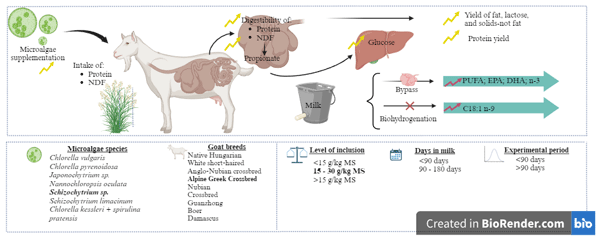
Boukrouh, S., Mnaouer, I., Mendes de Souza, P., Hornick, J.-L., Nilahyane, A., El Amiri, B., and Hirich, A.: Microalgae supplementation improves goat milk composition and fatty acid profile: a meta-analysis and meta-regression, Arch. Anim. Breed., 68, 223–238, https://doi.org/10.5194/aab-68-223-2025, 2025a.
Boukrouh, S., Al Rharad, A., Ait El Alia, O., Hornick, J.-L., and Faye, B.: Camel meat composition by species, breeds, publication year, age, and breeding system: A global systematic review and meta-analysis, Meat Sci., 231, 109947, https://doi.org/10.1016/j.meatsci.2025.109947, 2025b.
Boukrouh, S., El Alia, O. A., and Faye, B.: Worldwide camel meat and products: An extensive analysis of production, consumption patterns, market evolution, and supply chain effectiveness, Meat Sci., 109882, https://doi.org/10.1016/j.meatsci.2025.109882, 2025c.
Britt, J. H., Cushman, R. A., Dechow, C. D., Dobson, H., Humblot, P., Hutjens, M. F., Jones, G. A., Ruegg, P. S., Sheldon, I. M., and Stevenson, J. S.: Invited review: Learning from the future – A vision for dairy farms and cows in 2067, J. Dairy Sci., 101, 3722–3741, https://doi.org/10.3168/jds.2017-14025, 2018.
Carroll, S. M., DePeters, E. J., Taylor, S. J., Rosenberg, M., Perez-Monti, H., and Capps, V. A.: Milk composition of Holstein, Jersey, and Brown Swiss cows in response to increasing levels of dietary fat, Anim. Feed Sci. Technol., 131, 451–473, https://doi.org/10.1016/j.anifeedsci.2006.06.019, 2006.
Chen, J. and Liu, H.: Nutritional Indices for Assessing Fatty Acids: A Mini-Review, International Journal of Molecular Sciences, 21, 5695, https://doi.org/10.3390/IJMS21165695, 2020.
Chen, W., Li, T., Du, S., Chen, H., and Wang, Q.: Microalgal polyunsaturated fatty acids: Hotspots and production techniques, Front Bioeng. Biotechnol., 11, 1146881, https://doi.org/10.3389/fbioe.2023.1146881, 2023.
Deeks, J. J., Higgins, J. P. T., Altman, D. G., and Group, C. S. M.: Analysing data and undertaking meta-analyses, Cochrane handbook for systematic reviews of interventions, 241–284, https://doi.org/10.1002/9781119536604.ch10, 2019.
Dewanckele, L., Toral, P. G., Vlaeminck, B., and Fievez, V.: Invited review: Role of rumen biohydrogenation intermediates and rumen microbes in diet-induced milk fat depression: An update, J. Dairy Sci., 103, 7655–7681, https://doi.org/10.3168/jds.2019-17662, 2020.
Dolganyuk, V., Belova, D., Babich, O., Prosekov, A., Ivanova, S., Katserov, D., Patyukov, N., and Sukhikh, S.: Microalgae: A Promising Source of Valuable Bioproducts, Biomolecules, 10, https://doi.org/10.3390/biom10081153, 2020.
Duval, S. and Tweedie, R.: A Nonparametric “Trim and Fill” Method of Accounting for Publication Bias in Meta-Analysis, J. Am. Stat. Assoc., 95, 89–98, https://doi.org/10.1080/01621459.2000.10473905, 2000.
Egger, M., Smith, G. D., Schneider, M., and Minder, C.: Bias in meta-analysis detected by a simple, graphical test, Bmj, 315, 629–634, 1997.
Fawcett, C. A., Senhorinho, G. N. A., Laamanen, C. A., and Scott, J. A.: Microalgae as an alternative to oil crops for edible oils and animal feed, Algal Res., 64, 102663, https://doi.org/10.1016/j.algal.2022.102663, 2022.
Field, A. P. and Gillett, R.: How to do a meta-analysis, British Journal of Mathematical and Statistical Psychology, 63, 665–694, https://doi.org/10.1348/000711010X502733, 2010.
Gross, J. J.: Limiting factors for milk production in dairy cows: perspectives from physiology and nutrition, J. Anim. Sci., 100, skac044, https://doi.org/10.1093/jas/skac044, 2022.
Lamminen, M., Halmemies-Beauchet-Filleau, A., Kokkonen, T., Simpura, I., Jaakkola, S., and Vanhatalo, A.: Comparison of microalgae and rapeseed meal as supplementary protein in the grass silage based nutrition of dairy cows, Anim. Feed Sci. Technol., 234, 295–311, https://doi.org/10.1016/j.anifeedsci.2017.10.002, 2017.
Li, C., Sun, D., Zhang, S., Liu, L., Alim, M. A., and Zhang, Q.: A post-GWAS confirming the SCD gene associated with milk medium- and long-chain unsaturated fatty acids in Chinese Holstein population, Anim. Genet., 47, 483–490, https://doi.org/10.1111/age.12432, 2016.
Lock, A. L. and Garnsworthy, P. C.: Seasonal variation in milk conjugated linoleic acid and
Δ9-desaturase activity in dairy cows, Livest. Prod. Sci., 79, 47–59, https://doi.org/10.1016/S0301-6226(02)00118-5, 2003.
Maass, B. L., Katunga Musale, D., Chiuri, W. L., Gassner, A., and Peters, M.: Challenges and opportunities for smallholder livestock production in post-conflict South Kivu, eastern DR Congo, Trop. Anim. Health Prod., 44, 1221–1232, https://doi.org/10.1007/s11250-011-0061-5, 2012.
Manzocchi, E., Guggenbühl, B., Kreuzer, M., and Giller, K.: Effects of the substitution of soybean meal by spirulina in a hay-based diet for dairy cows on milk composition and sensory perception, J. Dairy Sci., 103, 11349–11362, https://doi.org/10.3168/jds.2020-18602, 2020.
Marques, J. A., Del Valle, T. A., Ghizzi, L. G., Zilio, E. M. C., Gheller, L. S., Nunes, A. T., Silva, T. B. P., Dias, M. S. da S., Grigoletto, N. T. S., Koontz, A. F., da Silva, G. G., and Rennó, F. P.: Increasing dietary levels of docosahexaenoic acid-rich microalgae: Ruminal fermentation, animal performance, and milk fatty acid profile of mid-lactating dairy cows, J. Dairy Sci., 102, 5054–5065, https://doi.org/10.3168/jds.2018-16017, 2019.
Moore, S. S., Costa, A., Pozza, M., Vamerali, T., Niero, G., Censi, S., and De Marchi, M.: How animal milk and plant-based alternatives diverge in terms of fatty acid, amino acid, and mineral composition, NPJ Sci. Food, 7, 50, https://doi.org/10.1038/s41538-023-00227-w, 2023.
Nakagawa, S., Yang, Y., Macartney, E. L., Spake, R., and Lagisz, M.: Quantitative evidence synthesis: a practical guide on meta-analysis, meta-regression, and publication bias tests for environmental sciences, Environ Evid, 12, 8, https://doi.org/10.1186/s13750-023-00301-6 , 2023.
Nosek, B. A., Hardwicke, T. E., Moshontz, H., Allard, A., Corker, K. S., Dreber, A., Fidler, F., Hilgard, J., Kline Struhl, M., and Nuijten, M. B.: Replicability, robustness, and reproducibility in psychological science, Annu. Rev. Psychol., 73, 719–748, https://doi.org/10.1146/annurev-psych-020821-114157, 2022.
O'Dea, R. E., Lagisz, M., Jennions, M. D., Koricheva, J., Noble, D. W. A., Parker, T. H., Gurevitch, J., Page, M. J., Stewart, G., and Moher, D.: Preferred reporting items for systematic reviews and meta-analyses in ecology and evolutionary biology: a PRISMA extension, Biological Reviews, 96, 1695–1722, https://doi.org/10.1111/brv.12721, 2021.
Oosting, S. J., Udo, H. M. J., and Viets, T. C.: Development of livestock production in the tropics: farm and farmers' perspectives, Animal, 8, 1238–1248, https://doi.org/10.1017/S1751731114000548, 2014.
Orzuna-Orzuna, J. F., Dorantes-Iturbide, G., Lara-Bueno, A., Mendoza-Martínez, G. D., Miranda-Romero, L. A., and Hernández-García, P. A.: Effects of dietary tannins' supplementation on growth performance, rumen fermentation, and enteric methane emissions in beef cattle: A meta-analysis, Sustainability, 13, 7410, https://doi.org/10.3390/su13137410, 2021.
Peter, A. P., Koyande, A. K., Chew, K. W., Ho, S.-H., Chen, W.-H., Chang, J.-S., Krishnamoorthy, R., Banat, F., and Show, P. L.: Continuous cultivation of microalgae in photobioreactors as a source of renewable energy: Current status and future challenges, Renewable and Sustainable Energy Reviews, 154, 111852, https://doi.org/10.1016/j.rser.2021.111852, 2022.
Petkov, G. and Garcia, G.: Which are fatty acids of the green alga Chlorella?, Biochem. Syst. Ecol., 35, 281–285, https://doi.org/10.1016/j.bse.2006.10.017, 2007.
Rafa, N., Ahmed, S. F., Badruddin, I. A., Mofijur, M., and Kamangar, S.: Strategies to Produce Cost-Effective Third-Generation Biofuel From Microalgae, Front. Energy Res., 9, https://doi.org/10.3389/fenrg.2021.749968, 2021.
Rosenthal, R.: The file drawer problem and tolerance for null results, Psychological Bulletin, 86, 638–641, https://doi.org/10.1037/0033-2909.86.3.638, 1979.
Sakadevan, K. and Nguyen, M.-L.: Chapter Four – Livestock Production and Its Impact on Nutrient Pollution and Greenhouse Gas Emissions, in: Advances in Agronomy, vol. 141, edited by: Sparks, D. L., Academic Press, 147–184, https://doi.org/10.1016/bs.agron.2016.10.002, 2017.
Shingfield, K. J., Kairenius, P., Ärölä, A., Paillard, D., Muetzel, S., Ahvenjärvi, S., Vanhatalo, A., Huhtanen, P., Toivonen, V., and Griinari, J. M.: Dietary fish oil supplements modify ruminal biohydrogenation, alter the flow of fatty acids at the omasum, and induce changes in the ruminal Butyrivibrio population in lactating cows, J. Nutr., 142, 1437–1448, https://doi.org/10.3945/jn.112.158576, 2012.
Sierra-Galicia, M. I., Rodríguez-de Lara, R., Orzuna-Orzuna, J. F., Lara-Bueno, A., Ramírez-Valverde, R., and Fallas-López, M.: Effects of supplementation with bee pollen and propolis on growth performance and serum metabolites of rabbits: A meta-analysis, Animals, 13, 439, https://doi.org/10.3390/ani13030439, 2023.
Tricarico, J. M., Kebreab, E., and Wattiaux, M. A.: MILK Symposium review: Sustainability of dairy production and consumption in low-income countries with emphasis on productivity and environmental impact, J. Dairy Sci., 103, 9791–9802, https://doi.org/10.3168/jds.2020-18269, 2020.
Valente, L. M. P., Cabrita, A. R. J., Maia, M. R. G., Valente, I. M., Engrola, S., Fonseca, A. J. M., Ribeiro, D. M., Lordelo, M., Martins, C. F., Falcão e Cunha, L., de Almeida, A. M., and Freire, J. P. B.: Chapter 9 – Microalgae as feed ingredients for livestock production and aquaculture, in: Microalgae, edited by: Galanakis, C. M., Academic Press, 239–312, https://doi.org/10.1016/B978-0-12-821218-9.00009-8, 2021.
Viechtbauer, W.: Conducting meta-analyses in R with the metafor package, J. Stat. Softw., 36, 1–48, 2010.